





What's Happening?
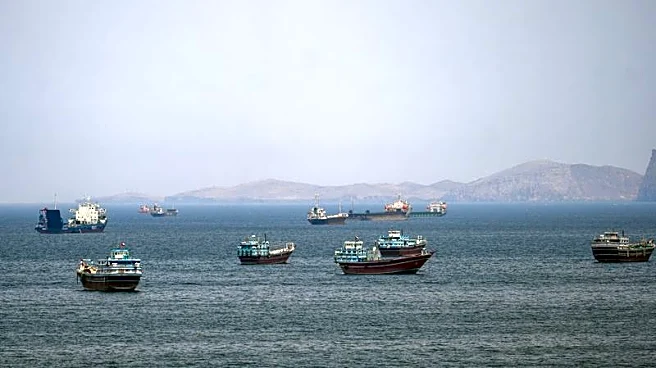
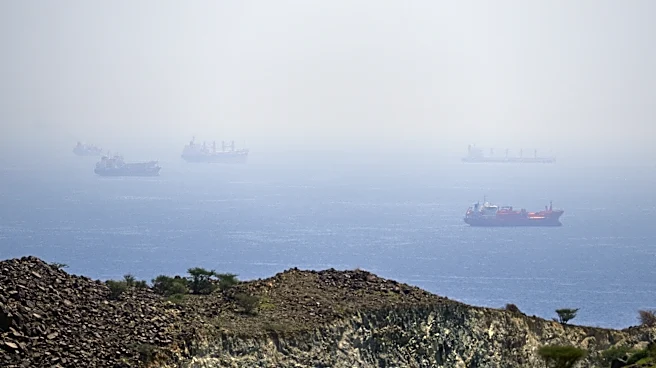
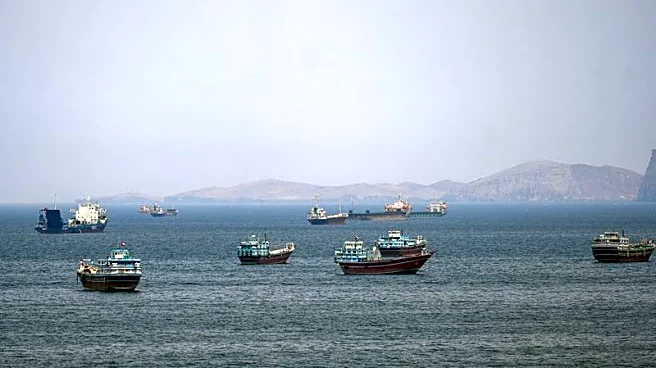
Germany's largest container shipping line, Hapag-Lloyd, is currently unable to navigate its commercial vessels through the Strait of Hormuz due to escalating tensions in the region. The company's CEO, Rolf Habben Jansen, stated that six of their vessels are
stuck in the Persian Gulf, awaiting a safe passage opportunity. The conflict in Iran has led to increased fuel prices, resulting in additional weekly costs of approximately $50 million for the company. Hapag-Lloyd has imposed surcharges on customers to offset these costs, which have been generally accepted. The situation has been exacerbated by recent attacks on cargo ships by Iran's armed forces, further complicating navigation through the strait.
Why It's Important?
The inability to navigate the Strait of Hormuz poses significant economic and logistical challenges for Hapag-Lloyd and other shipping companies. The strait is a critical maritime chokepoint, and disruptions can lead to increased shipping costs and delays in global supply chains. The situation highlights the vulnerability of international trade routes to geopolitical tensions, particularly in regions with strategic importance. The increased costs and potential for further disruptions could impact global shipping rates and the availability of goods, affecting businesses and consumers worldwide.
What's Next?
Hapag-Lloyd and other affected shipping companies will likely continue to monitor the situation closely, seeking alternative routes or solutions to mitigate the impact of the conflict. Diplomatic efforts may be necessary to ensure the safe passage of vessels through the Strait of Hormuz. The international community, including maritime and trade organizations, may need to engage in discussions to address the security concerns and ensure the stability of this vital trade route.