








What's Happening?
Researchers at the University of Geneva have identified a detailed transmission pathway explaining how the circadian clock, an internal timing system, communicates with brain circuits to regulate daily wakefulness. Published in Current Biology, the study
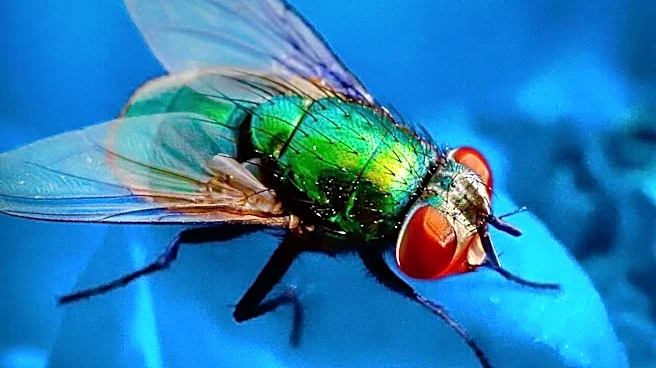
utilized the fruit fly, Drosophila melanogaster, to map the specific neurons that carry the clock's instructions to downstream brain regions. They found that clock neurons inhibit dopaminergic neurons, which in turn stimulate neurons in the mushroom body, a brain structure involved in learning, memory, and sleep regulation. This inhibitory and release mechanism allows the biological clock to modulate the strength of a wakefulness signal in a rhythmic manner, coordinating the alternation of sleep and wakefulness over a 24-hour cycle. The research highlights that the clock doesn't just keep time but actively transmits temporal information to circuits that determine when an animal sleeps and wakes, primarily through dopamine signaling.
Why It's Important?
This research is significant for understanding the fundamental mechanisms by which the biological clock influences brain function and behavior, with implications for human health. Disruptions to the circadian clock, caused by factors like shift work, jet lag, and irregular light exposure, are linked to a range of sleep disorders, cognitive impairments, and mood alterations. By elucidating how the clock communicates with arousal circuits, this study provides a foundational understanding that could lead to strategies for mitigating the negative effects of circadian rhythm disturbances in humans. The role of dopamine in promoting wakefulness is conserved across species, making the fruit fly a valuable model for studying these complex interactions. A deeper understanding of these pathways could inform future treatments for sleep-related conditions and improve overall brain health.
What's Next?
The findings from this study provide a concrete framework for future research. Scientists can now investigate how other clock outputs reach different brain regions and how the rhythm of dopaminergic signaling is maintained throughout the day and night. The research also opens avenues to explore whether similar clock-to-circuit architectures operate in the mammalian brain, including humans. Further studies could focus on the molecular machinery involved, such as the gene Pka-C1, which was identified as playing a role in rhythmic transcription. This could lead to the development of targeted interventions or therapies for individuals suffering from circadian rhythm disorders, ultimately improving sleep quality, cognitive function, and mood.
Beyond the Headlines
The study's methodology, combining genetic mapping of neuronal connections with live measurements of neural activity, offers a powerful approach for tracing complete pathways from the biological clock to behavior. This approach, while conducted in fruit flies, demonstrates the potential for uncovering intricate biological mechanisms that are difficult to study in larger, more complex organisms. The research underscores the profound impact of our internal biological clock on daily life, extending beyond simple sleep-wake cycles to influence broader cognitive and physiological functions. It highlights the intricate dance between our internal timing system and external environment, emphasizing the importance of maintaining a consistent day-night rhythm for overall well-being and potentially revealing new insights into the evolutionary conservation of these fundamental biological processes.