







What's Happening?
Ecuador is actively promoting its diverse tourism offerings, emphasizing both its natural wonders and rich cultural heritage. The country, home to the Galapagos Islands, is showcasing its unique wildlife, including endemic species like the Galapagos sea
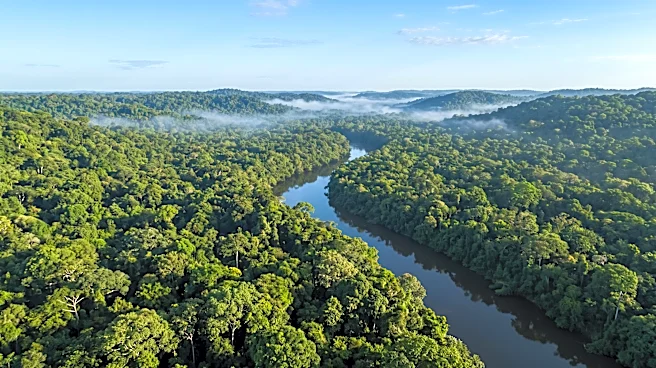
lion, marine iguana, and giant tortoise. Beyond the Galapagos, mainland Ecuador features the high-altitude capital Quito, with its historic architectural treasures such as the La Compañía de Jesús church and the Basílica del Voto Nacional. Natural attractions like Cotopaxi National Park, home to the world's highest active snow-capped volcano, and the Quilotoa crater lake are also highlighted. The Amazon rainforest, covering 74% of Ecuador's forested area, offers opportunities to explore exotic plants, birds, and rehabilitation centers like AmaZoonico. The country is positioning itself as a destination for both adventure and cultural immersion, with options for combining Galapagos tours with visits to the Amazon or other South American countries like Peru.
Why It's Important?
The emphasis on Ecuador's unique tourism assets is crucial for its economic development and global positioning. By highlighting its biodiversity and cultural sites, Ecuador aims to attract a broader range of international tourists, which can significantly boost its service sector, create jobs, and generate foreign exchange. The promotion of sustainable and community-based tourism options, as mentioned in the context of the Amazon and Andean communities, can also foster local economic empowerment and preserve indigenous cultures. For the U.S. tourism market, this offers new and diverse travel opportunities, potentially shifting travel patterns towards eco-tourism and cultural immersion experiences in South America. The focus on unique wildlife, such as that found in the Galapagos, also contributes to global conservation awareness and efforts, as tourism revenue can be reinvested into protecting these fragile ecosystems.
What's Next?
Ecuador is expected to continue developing and promoting its tourism infrastructure and packages, with a focus on combining different experiences like island hopping in the Galapagos with Amazon rainforest excursions or cultural tours in the Andes. Tour operators are likely to offer more tailored itineraries that cater to travelers seeking deeper connections with local communities and more sustainable travel options. There will likely be ongoing efforts to monitor and manage the environmental impact of tourism, particularly in sensitive areas like the Galapagos Islands, to ensure long-term sustainability. Additionally, the country may explore further international collaborations to enhance its tourism reach and streamline travel logistics for visitors from key markets, including the U.S. The development of new attractions and the enhancement of existing ones, such as the rehabilitation center AmaZoonico, will also be a focus.
Beyond the Headlines
The promotion of Ecuador's tourism goes beyond mere economic gain; it touches upon significant ethical and cultural dimensions. The emphasis on community-based tourism and genuine cultural exchange, as opposed to 'staged tourism,' reflects a growing global trend towards responsible travel. This approach can help combat the potential negative impacts of mass tourism, such as cultural commodification and environmental degradation. By involving local communities directly in tourism, Ecuador can ensure that the economic benefits are distributed more equitably and that indigenous knowledge and traditions are preserved and celebrated. Furthermore, the country's rich biodiversity, particularly in the Galapagos and the Amazon, positions it as a critical player in global conservation efforts. The success of its tourism model could serve as a blueprint for other developing nations seeking to balance economic growth with environmental protection and cultural authenticity.