






What's Happening?
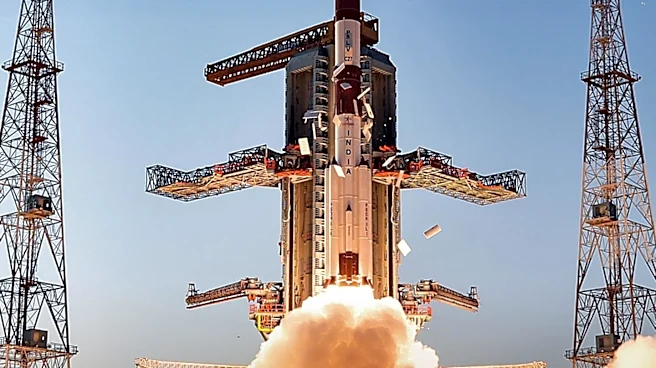
Skyroot Aerospace, an Indian private company, successfully launched its Vikram-1 rocket, marking a significant achievement in India's private space sector. The rocket, launched from the Satish Dhawan Space Centre, reached a 450-km orbit and deployed several
payloads. This mission, named Aagaman, signifies India's growing presence in the global space industry. Skyroot, founded in 2018 by former ISRO scientists, has rapidly advanced, becoming India's first space unicorn with a valuation of $1.1 billion. The company plans to increase its rocket production and develop a larger launch vehicle, Vikram-2, by 2027.
Why It's Important?
Skyroot's success highlights the rapid growth and potential of India's private space sector, which has expanded significantly since opening to private investment in 2020. This development positions India as a competitive player in the global space industry, with a space economy valued at $8.4 billion and projected to grow to $44 billion by 2033. The success of private companies like Skyroot could attract more foreign investment and drive innovation in space technology, benefiting both the Indian economy and the global space community.
What's Next?
Skyroot plans to conduct additional development flights to ensure the reliability of the Vikram-1 rocket before commencing commercial operations. The company aims to double its rocket production capacity and enhance the Vikram-1 with improved payload capabilities. The development of the Vikram-2 launch vehicle is also underway, expected to debut in 2027. These advancements will likely strengthen India's position in the space industry and encourage further private sector involvement.