
What's Happening?
China has announced a ban on concealed door handles for electric vehicles (EVs), a design popularized by Tesla, due to safety concerns following several fatal incidents. The new regulations, issued by the
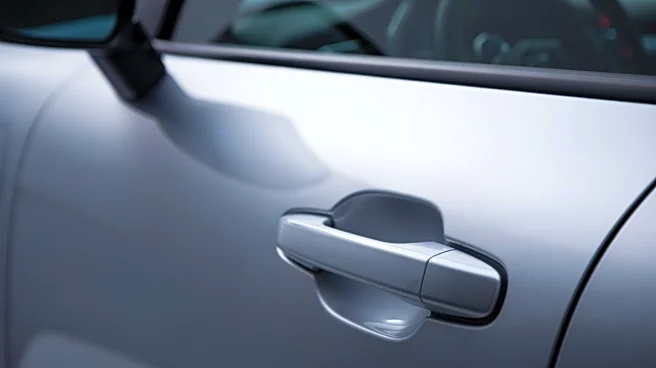
Ministry of Industry and Information Technology, will require all EVs sold in China from 2027 to have a mechanical release on both the inside and outside of every door, except for the trunk. This decision comes after incidents where power failures trapped occupants inside vehicles, leading to fatalities. The regulations will be phased in, starting with newly-approved EVs in 2027 and extending to existing models by 2029. The design, which integrates the handle into the door and uses electrical signals to activate the latch, has been criticized for its safety record despite its aerodynamic benefits.
Why It's Important?
The ban on concealed door handles in China is significant as it may influence global vehicle design standards. Automakers like Tesla, BYD, BMW, and Mercedes-Benz might need to reconsider their door handle designs to comply with these new regulations, potentially affecting their global production strategies. The move highlights the growing emphasis on safety in vehicle design, especially in the EV market, which is rapidly expanding. The decision also underscores the influence of regulatory actions in one major market on global automotive trends, as manufacturers may opt to standardize designs to avoid maintaining different specifications for different regions.
What's Next?
In the U.S., similar safety concerns have led to the introduction of the SAFE Exit Act in Congress, which proposes similar requirements for door handles on vehicles sold in the country. Additionally, the National Highway Traffic Safety Administration is investigating Tesla's door handle technology. These developments suggest that other countries might follow China's lead, potentially leading to a broader shift away from flush-mounted door handles in the automotive industry.