
What's Happening?
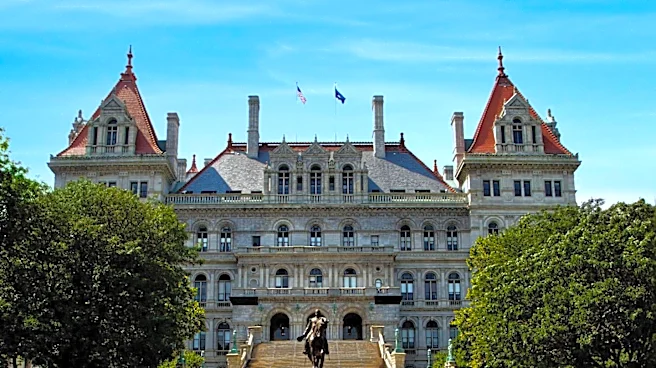
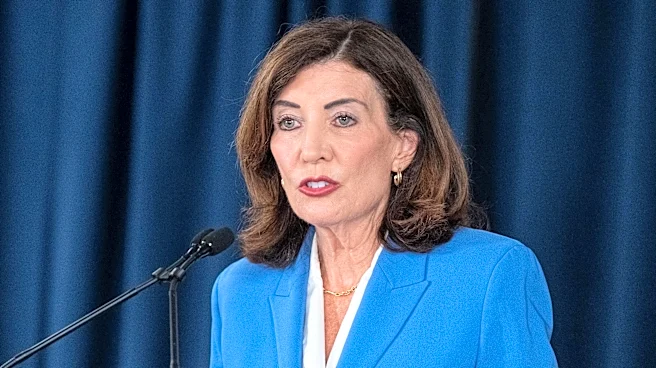
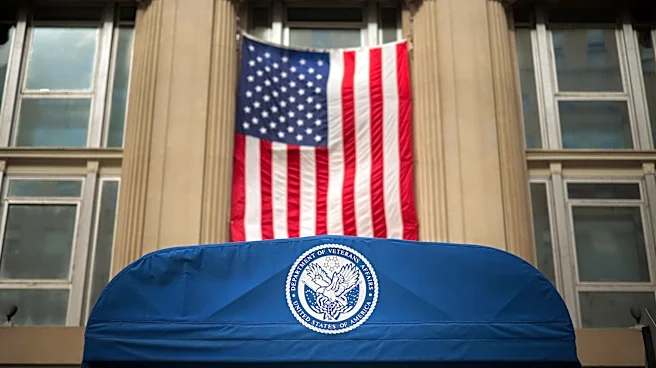
Governor Kathy Hochul has issued a directive for flags on all New York State government buildings to be flown at half-staff. This action is taken to honor the memory of former Assembly Majority Leader
Ron Canestrari, who passed away on November 9, 2026. The flags will be lowered from sunrise to sunset on Saturday, November 14. This traditional gesture of respect is a common practice in the United States to commemorate the passing of significant public figures and to allow for a period of mourning and remembrance.
Why It's Important?
The directive to fly flags at half-staff is a symbolic act that underscores the respect and recognition given to individuals who have dedicated their lives to public service. Former Assembly Majority Leader Ron Canestrari's passing and the subsequent honor from Governor Hochul highlight his significant contributions to New York State politics and governance. Such gestures serve to acknowledge the impact of public servants on their communities and the state as a whole. It also provides an opportunity for citizens to reflect on the legacy of their leaders and the continuity of democratic institutions. For the state government, it reinforces a sense of tradition and collective remembrance for those who have shaped its legislative landscape.
What's Next?
The flags will be flown at half-staff for the specified period on Saturday, November 14. Beyond this immediate act of remembrance, the legacy of former Assembly Majority Leader Ron Canestrari will likely be honored through various tributes and discussions within New York's political circles. His contributions to the state legislature and his role as Assembly Majority Leader will be remembered as part of New York's political history. While no further official actions are typically mandated after the flag directive, the event serves as a moment for reflection on the careers of public figures and their lasting influence on state policy and public life.
Beyond the Headlines
The act of lowering flags to half-staff, while seemingly simple, carries deep cultural and historical significance. It is a universal symbol of mourning and respect, transcending political affiliations and personal differences. In the context of a former Assembly Majority Leader, it speaks to the collective memory of the state and the recognition of a life spent in service to the public. Such moments can also serve to unite a community in shared remembrance, fostering a sense of continuity and respect for the institutions of government. It subtly reminds the public of the human element behind political roles and the personal sacrifices often made in the pursuit of public good, reinforcing the solemnity and importance of civic duty.