
What's Happening?
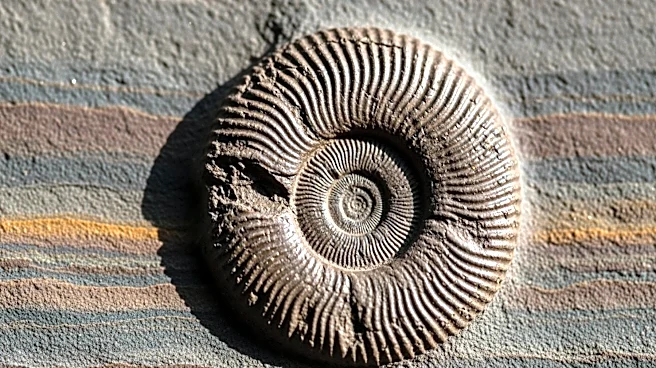
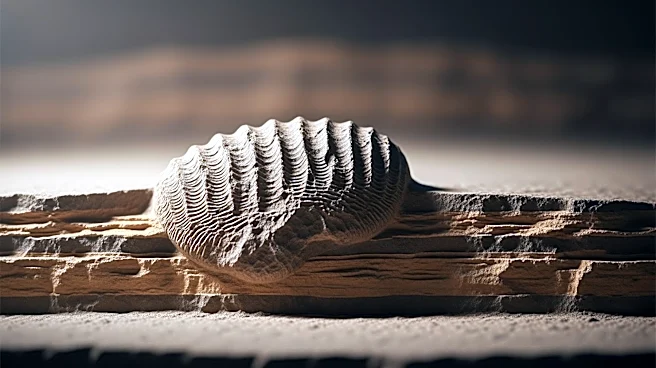
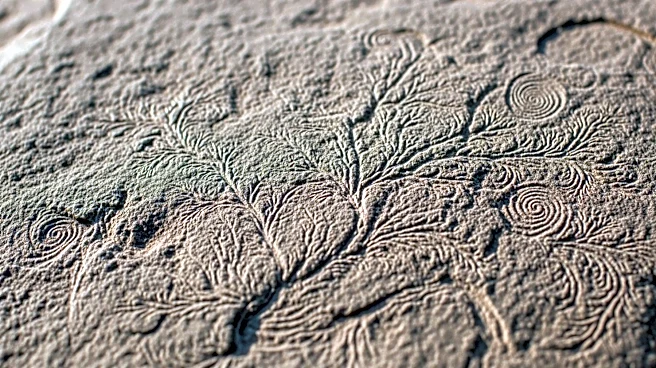
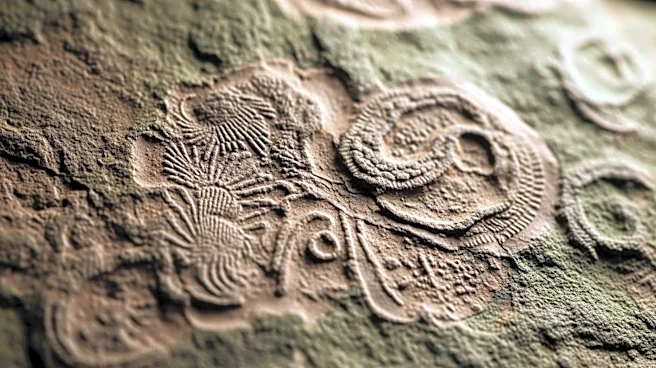
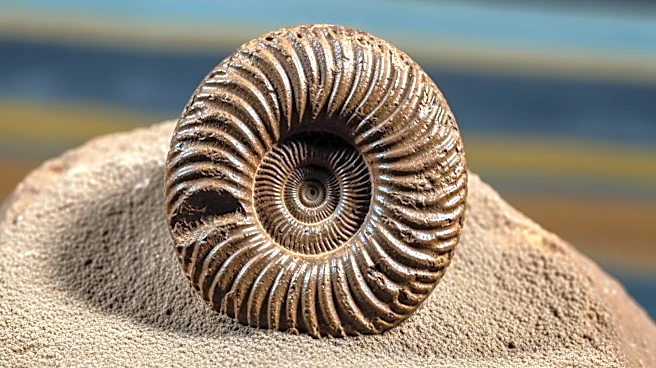
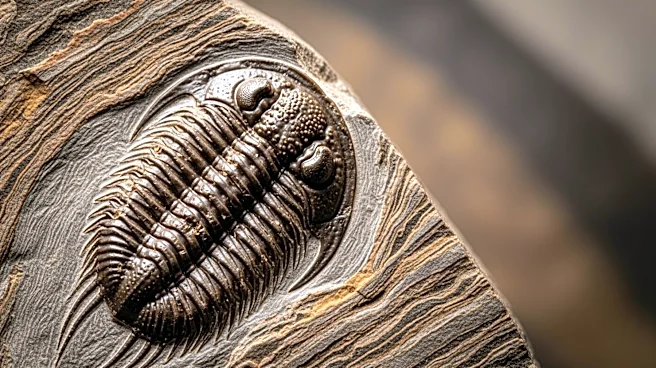
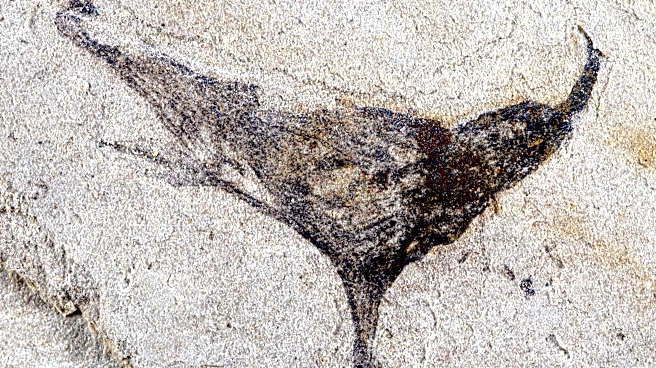
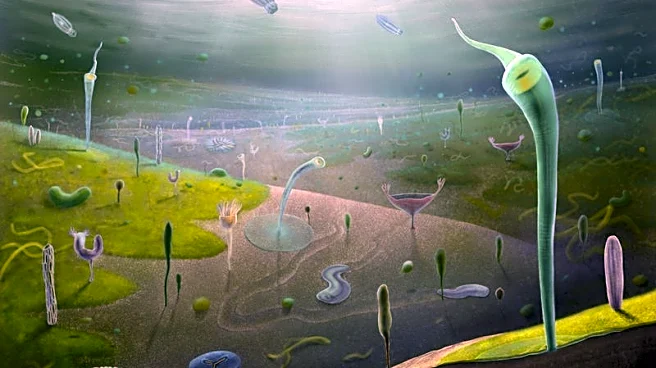
Scientists have uncovered over 700 fossils in Yunnan province, China, providing a glimpse into the evolution of complex animals from 539 million years ago. These fossils, dating back to the end of the Ediacaran period, reveal the transition from simple,
two-dimensional life forms to more complex, three-dimensional creatures. This discovery challenges previous beliefs that such complex life forms only emerged during the Cambrian period, approximately 4 million years later. The study, published in the journal Science, highlights the presence of animals with bilateral symmetry, a characteristic of modern animal life. This finding offers new insights into the evolutionary timeline and the development of the modern animal-dominated biosphere.
Why It's Important?
The discovery of these fossils is significant as it provides evidence of complex life forms existing earlier than previously thought, bridging a gap in the evolutionary timeline. This challenges the 'rocks versus clocks' debate in paleontology, where genetic analysis suggested earlier development of complex traits than fossil records indicated. The findings suggest a closer alignment between genetic data and fossil evidence, offering a more comprehensive understanding of evolutionary history. This research could reshape scientific perspectives on the development of life on Earth, influencing future studies in evolutionary biology and paleontology.
What's Next?
With this new evidence, scientists are poised to explore further questions about the mechanisms and environmental conditions that facilitated the rapid diversification of life during this period. Researchers aim to understand the interactions between life forms and their environments, and how these dynamics contributed to the Cambrian explosion. This could involve examining the role of oxygen levels and genetic changes in driving evolutionary processes. The findings may also prompt additional fossil excavations in similar geological settings to uncover more evidence of early complex life.
Beyond the Headlines
The implications of this discovery extend beyond paleontology, potentially influencing our understanding of biodiversity and ecosystem dynamics. The transition from simple to complex life forms marks a pivotal moment in Earth's history, shaping the planet's biological and geological landscape. This research underscores the interconnectedness of life and environmental factors, offering insights into how current and future changes in Earth's ecosystems might unfold. It also highlights the importance of preserving fossil sites, which serve as critical windows into our planet's past.