

What's Happening?
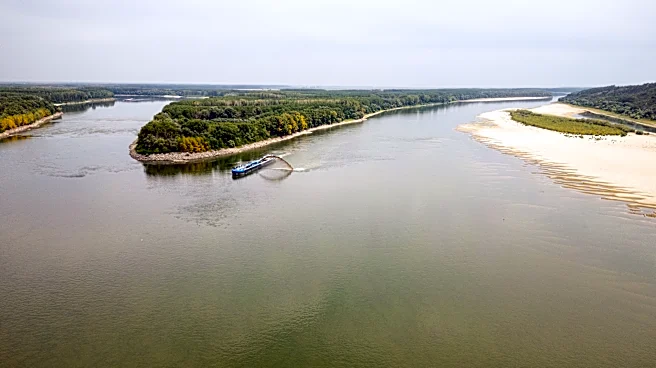
In Budapest, a World War II-era motorbike and the remains of two Wehrmacht soldiers have been recovered from the Danube River. The discovery was made possible due to low water levels, which exposed the relics. The Volksbund Deutsche Kriegsgräberfürsorge,
a German war graves commission, conducted the exhumation with Hungarian assistance. The soldiers' identity discs were found intact, suggesting their deaths were never reported to the Wehrmacht information office. The motorbike, identified as a DKW NZ 350-1, was preserved in the riverbed mud, which contained gas oil, aiding in the preservation of the artifacts.
Why It's Important?
The recovery of these relics provides a tangible connection to the past, offering insights into the historical events of World War II. It highlights the ongoing efforts to locate and honor war dead, ensuring their stories are not forgotten. The preservation of the soldiers' identity discs allows for the possibility of informing their descendants, providing closure to families. Additionally, the discovery underscores the impact of environmental conditions on archaeological finds, as low water levels reveal hidden historical artifacts.
What's Next?
The remains of the soldiers will be examined and reburied at the Budaörs war cemetery. The Volksbund expects more discoveries as low water levels persist, potentially uncovering additional war relics and remains. This could lead to further collaborations between German and Hungarian authorities in the recovery and preservation of historical artifacts. The findings may also prompt discussions on the preservation of submerged historical sites and the ethical considerations of such recoveries.