


What's Happening?
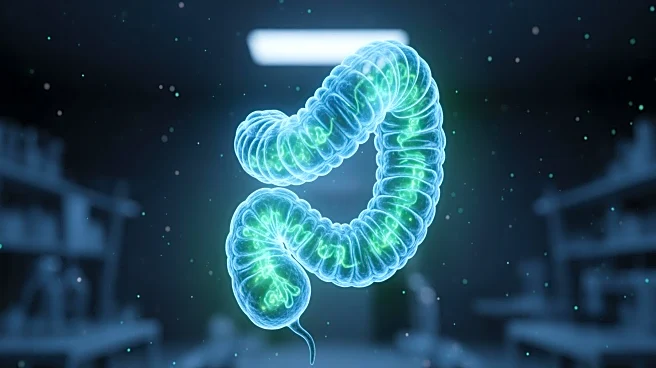
An international research team led by Victor Sourjik has discovered that gut bacteria possess the ability to sense a wide range of chemical signals in their environment, which plays a crucial role in human health. The study, involving scientists from
the Max Planck Institute for Terrestrial Microbiology, the University of Ohio, and the Philipps-University Marburg, focused on Clostridia, a group of bacteria prevalent in the human gut. These bacteria are known to support gut health by detecting various metabolic compounds, including breakdown products from carbohydrates, fats, proteins, DNA, and amines. The research revealed that gut bacteria are not randomly responding to their environment but are selectively tuned to specific metabolic signals, with lactic acid and formic acid identified as key stimuli. This discovery highlights the importance of 'cross-feeding,' where one bacterial species releases metabolites that other species use as food, thus stabilizing the gut ecosystem.
Why It's Important?
The findings of this study have significant implications for understanding the human microbiome and its impact on health. By identifying the specific chemical signals that gut bacteria respond to, researchers can better understand how these microorganisms contribute to gut health and overall well-being. This knowledge could lead to the development of DNA-based diets tailored to an individual's gut microbiome composition, optimizing health outcomes by supporting a resilient microbiome. Such diets could include diverse fibers, fermented foods, and consistent meal timing to enhance the beneficial effects of gut bacteria. Additionally, the discovery of new sensory receptors in gut bacteria opens up possibilities for further research into other microbial ecosystems, potentially leading to advancements in microbiology and health sciences.
What's Next?
Future research may focus on applying the systematic approach used in this study to investigate sensory preferences in other microbial ecosystems. This could lead to a deeper understanding of how bacteria adapt their sensing abilities to changing environments, providing insights into the evolution of microbial communities. Additionally, the development of personalized nutrition plans based on an individual's gut microbiome could become a reality, offering new avenues for improving health and preventing diseases. Researchers may also explore the potential for manipulating gut bacteria to enhance their beneficial effects, paving the way for innovative treatments and interventions in gut health management.
Beyond the Headlines
The study's findings underscore the complexity and adaptability of the gut microbiome, highlighting its critical role in human health. The ability of gut bacteria to sense and respond to specific chemical signals suggests a sophisticated level of interaction between microorganisms and their host. This interaction is not only vital for maintaining gut health but also for influencing broader health outcomes, such as liver protection and longevity. The research also raises ethical and cultural considerations regarding the manipulation of the microbiome for health benefits, prompting discussions on the balance between scientific advancement and natural biological processes.