






What's Happening?
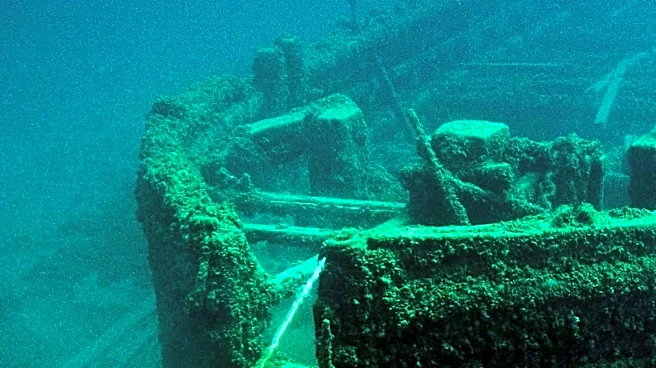
During the construction of the Varberg Tunnel in Sweden, workers discovered six shipwrecks dating from the Middle Ages to the 17th century. These findings, located near the historic city of Varberg, include a variety of ship designs, such as a caravel-style
ship and flat-bottomed medieval trade vessels. The most intact wreck, from the 1530s, was found to have a clinker-built style and traces of a fire, suggesting it may have been intentionally burned. The discovery provides valuable insights into historical maritime life and trade networks in the region.
Why It's Important?
The discovery of these shipwrecks offers a unique glimpse into the maritime history of the region, potentially reshaping our understanding of trade and shipbuilding practices during the Middle Ages. The findings could provide new information about the economic and cultural exchanges that took place in the Baltic Sea area. Additionally, the excavation and study of these wrecks can enhance our knowledge of historical ship construction techniques and materials, contributing to the broader field of archaeology and maritime history.