






What's Happening?
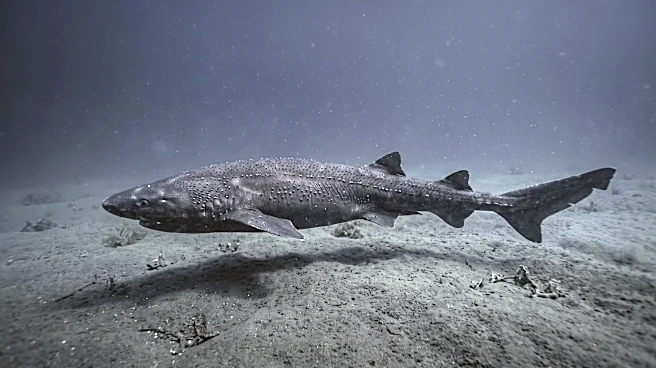
Indian researchers have identified a new species of deep-sea shark, named Echinorhinus roinee, or the Indian bramble shark. This creature, which can grow up to 10 feet long and has dark skin covered in thorn-like scales, was previously misidentified as the Atlantic
bramble shark for decades. The discovery was made by scientists from the Zoological Survey of India and the ICAR-Central Marine Fisheries Research Institute, who examined specimens caught by deep-sea shrimp trawlers in the Indian Ocean, particularly at Sakthikulangara Fishing Harbour in Kerala. A closer look at the shark's anatomy and, crucially, DNA analysis revealed distinct genetic differences, confirming it as a separate species from both the Atlantic bramble shark and the Pacific prickly shark. This reclassification highlights the challenges in studying deep-sea ecosystems and distinguishing closely related species, even large ones that have been observed for years.
Why It's Important?
The identification of Echinorhinus roinee has significant implications for marine conservation and scientific understanding. Previously, fisheries records and ecological surveys grouped these sharks under the Atlantic bramble shark species. This means that data on their habitat, catch rates, and population changes may have been inaccurate, hindering effective conservation efforts. Accurate species identification is fundamental for assessing the conservation needs of any animal. The discovery also underscores the vast unknowns within deep-sea environments, suggesting that many other species might be misidentified or yet to be discovered. For the U.S. and international marine science community, this event emphasizes the importance of continued genetic research and detailed surveys to refine existing classifications and ensure robust conservation strategies for global marine biodiversity.
What's Next?
Further research is required to fully understand the Indian bramble shark. Scientists will need additional specimens, genetic comparisons, and more detailed surveys of deep-sea ecosystems to determine the full extent of its population, geographical distribution, and ecological role. The researchers have deposited reference specimens in the National Zoological Collections in Chennai, which will aid future studies. This discovery also prompts a re-evaluation of other sharks previously identified as Atlantic bramble sharks in the Indian Ocean region, as they might also belong to this newly recognized species. The ongoing efforts will contribute to a more accurate global marine biodiversity map and inform future conservation policies.
Beyond the Headlines
This discovery transcends mere taxonomic classification; it highlights a broader scientific challenge and opportunity. The fact that a 10-foot-long shark could be misidentified for decades underscores the limitations of traditional morphological studies and the transformative power of modern genetic techniques. It suggests that even well-studied regions or seemingly familiar species may harbor hidden biodiversity. This has ethical implications for how humans interact with marine environments, particularly regarding fishing practices and bycatch, as poorly understood populations are more vulnerable. Culturally, it reinforces the idea that the ocean's depths remain largely unexplored, continuing to hold mysteries that challenge our perceptions of the natural world and our place within it.