



What's Happening?
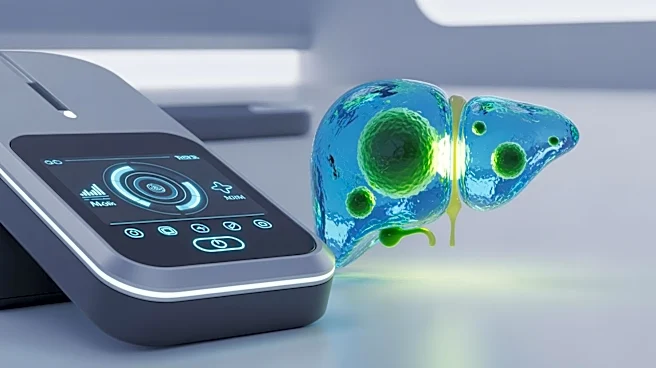
Researchers are advocating for the use of non-invasive tools (NITs) in diagnosing and managing metabolic dysfunction-associated steatohepatitis (MASH), a severe form of liver disease. Currently, liver biopsies are the standard for diagnosis, but they
are invasive and carry risks. The proposed shift to NITs aims to improve patient safety and accessibility to care. These tools could also facilitate drug development by providing more reliable data for clinical trials. The current reliance on histological assessments poses challenges in identifying at-risk populations and delays treatment until the disease has progressed significantly.
Why It's Important?
The transition to non-invasive diagnostic methods for MASH could revolutionize how this condition is managed. By reducing the need for invasive procedures, patient safety and comfort are significantly enhanced. This shift could also accelerate the development of new treatments by providing more consistent and reliable data for clinical trials. The broader adoption of NITs could lead to earlier diagnosis and intervention, potentially improving outcomes for patients with MASH. This approach aligns with a growing trend in medicine towards less invasive, more patient-friendly diagnostic and treatment methods.
What's Next?
Further research is needed to validate the effectiveness of NITs in diagnosing MASH and to establish regulatory standards for their use. This includes addressing current data gaps and ensuring that these tools meet the necessary criteria for clinical and regulatory acceptance. As these tools are refined and validated, they could become integral to routine clinical practice, offering a safer and more efficient alternative to liver biopsies. The development of guidelines for the use of NITs in clinical settings will be crucial in facilitating their widespread adoption.