





What's Happening?
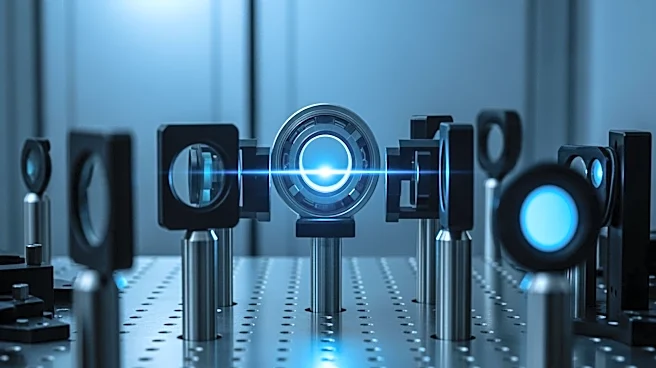
Physicists at Tsinghua University have simulated a quantum process known as false vacuum decay, which could theoretically lead to the end of the universe. This process involves a transition from a false vacuum, a temporary low-energy state, to a true
vacuum, a more stable state. If such a transition occurred, it could expand at the speed of light, altering the universe's fundamental physics. The simulation used Rydberg atoms to model the process, providing insights into the intersection of quantum theory and relativity, and the potential for new theoretical frameworks.
Why It's Important?
The simulation of false vacuum decay is significant for understanding the fundamental nature of the universe and the potential risks posed by quantum processes. It highlights the need for a unified theory that reconciles quantum mechanics and relativity, two pillars of modern physics. The research could lead to breakthroughs in theoretical physics and deepen our understanding of the universe's stability. While the immediate risk of such a transition is theoretical, the study underscores the importance of exploring extreme conditions to advance scientific knowledge.
Beyond the Headlines
The research into false vacuum decay also raises philosophical and ethical questions about the pursuit of knowledge and the potential consequences of scientific exploration. The ability to simulate such processes in a laboratory setting opens new avenues for experimentation but also requires careful consideration of the implications. The study contributes to ongoing debates about the role of science in society and the responsibilities of researchers in exploring potentially transformative phenomena.