






What's Happening?
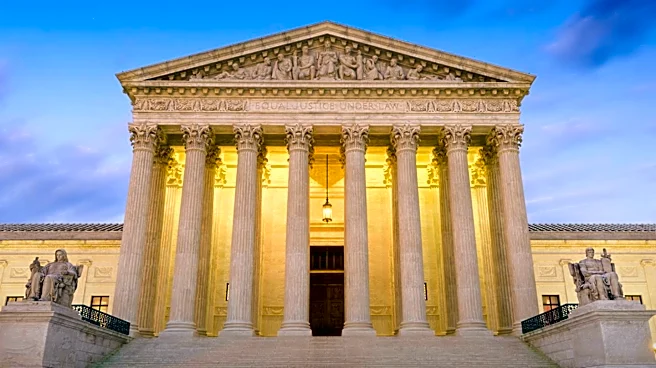
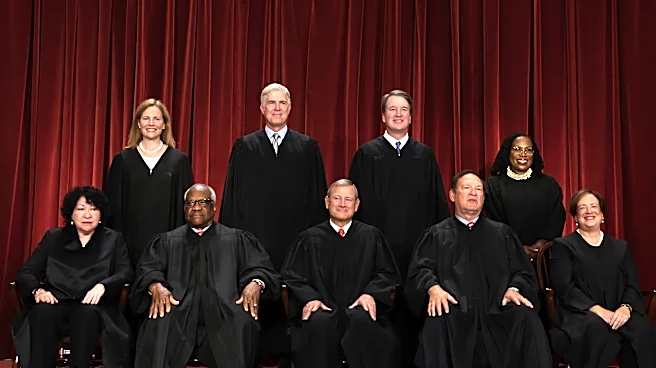
The U.S. Supreme Court recently issued two conflicting rulings involving President Trump, highlighting a significant double standard. In the case of Trump v. Slaughter, the Court ruled that President Trump can dismiss federal agency commissioners and directors
without cause, contradicting longstanding statutory language and precedent that required cause for such removals. This decision allows Trump to potentially dismiss regulators who oppose his corporate allies. Conversely, in Trump v. Cook, the Court prevented Trump from firing Lisa Cook, a Federal Reserve Governor, without cause, pending an investigation into allegations against her. Justice Amy Coney Barrett, who supported the decision in Slaughter, dissented in Cook, pointing out the inconsistency between the two rulings. Chief Justice Roberts justified the exception for the Federal Reserve by emphasizing its role in monetary policy, which he argued should remain free from political interference to prevent financial crises.
Why It's Important?
These rulings have significant implications for the independence of federal agencies and the balance of power within the U.S. government. The decision in Slaughter could undermine the ability of federal agencies to operate independently, as it allows for the dismissal of directors based on political motivations. This could lead to increased political interference in regulatory processes, potentially compromising public health and safety standards. On the other hand, the decision in Cook underscores the importance of maintaining the Federal Reserve's independence to ensure economic stability. The contrasting outcomes of these cases suggest a prioritization of financial market stability over other regulatory concerns, raising questions about the Court's commitment to protecting public interests against corporate influence.
What's Next?
The implications of these rulings may prompt legislative or executive actions to address the potential erosion of agency independence. Lawmakers and advocacy groups might push for reforms to reinforce the statutory protections for agency directors, ensuring that political considerations do not compromise regulatory integrity. Additionally, the decisions could lead to increased scrutiny of the Supreme Court's role in shaping the balance of power between the executive branch and independent agencies. Stakeholders, including environmental and consumer protection groups, may seek to challenge or mitigate the impact of the Slaughter ruling through legal or policy avenues.
Beyond the Headlines
The Supreme Court's decisions reflect broader tensions between corporate interests and regulatory oversight in the U.S. The rulings could signal a shift towards greater corporate influence over federal agencies, potentially affecting a wide range of policy areas, from environmental protection to consumer rights. This development raises ethical and legal questions about the role of the judiciary in safeguarding democratic principles and the public good. The Court's approach may also influence future cases involving executive power and agency independence, shaping the landscape of U.S. governance for years to come.