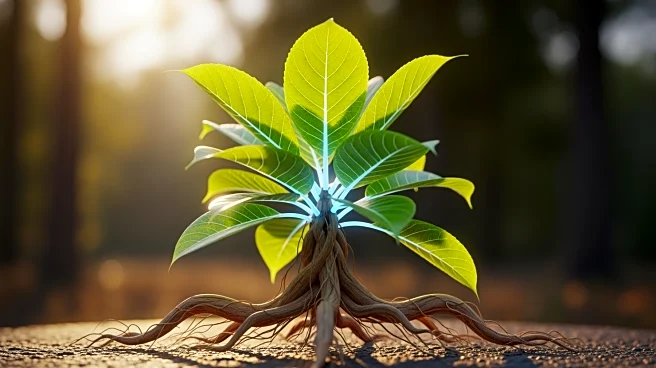




What's Happening?
Botanists have made significant advancements in the development of hybrid superplants, which are designed to produce multiple types of fruits and vegetables from a single plant. This innovation, inspired by the fictional concept of oversized fruits in Roald
Dahl's 'James and the Giant Peach,' has been realized through genetic engineering and plant breeding techniques. By the early 2030s, scientists were able to create plants that could grow fruits from different families, such as bananas, citrus, apples, and peaches, on a single tree. These hybrid plants, known as PolyPlants, offer the convenience of multiple harvests and are engineered to be more resilient to environmental challenges such as drought, fungal diseases, and insect attacks. The development of these superplants is seen as a crucial step in addressing food security issues globally, especially in regions facing food scarcity.
Why It's Important?
The creation of hybrid superplants represents a major breakthrough in agricultural technology, with the potential to significantly impact global food security. As traditional crops struggle to adapt to changing climate conditions, these genetically engineered plants offer a sustainable solution by providing a reliable source of nutrition. The ability to produce multiple types of fruits and vegetables from a single plant not only increases efficiency but also reduces the need for extensive land use, which is critical in densely populated areas. Furthermore, the enhanced nutritional content of these plants, achieved through gene editing, can help combat malnutrition and improve public health outcomes. As global temperatures rise and food scarcity becomes a pressing issue, the adoption of PolyPlants could play a vital role in ensuring a stable food supply for future generations.
What's Next?
The continued development and commercialization of hybrid superplants are expected to expand, with more farmers and private growers adopting these innovative crops. As gene editing technology advances, scientists may further enhance the resilience and nutritional value of these plants, making them even more suitable for diverse climates and soil conditions. Additionally, public acceptance of genetically modified organisms (GMOs) is likely to grow as the benefits of these superplants become more apparent. Policymakers and agricultural stakeholders may need to address regulatory and ethical considerations surrounding the use of gene editing in food production, ensuring that these technologies are used responsibly and equitably.
Beyond the Headlines
The development of hybrid superplants raises important ethical and cultural questions about the role of genetic engineering in agriculture. While these innovations offer promising solutions to food security challenges, they also prompt discussions about biodiversity, the preservation of traditional farming practices, and the potential impact on local ecosystems. As the technology becomes more widespread, it will be crucial to balance the benefits of increased food production with the need to protect natural habitats and maintain ecological diversity. Furthermore, the cultural significance of food and traditional agricultural methods may influence public perception and acceptance of these genetically engineered crops.