









What's Happening?
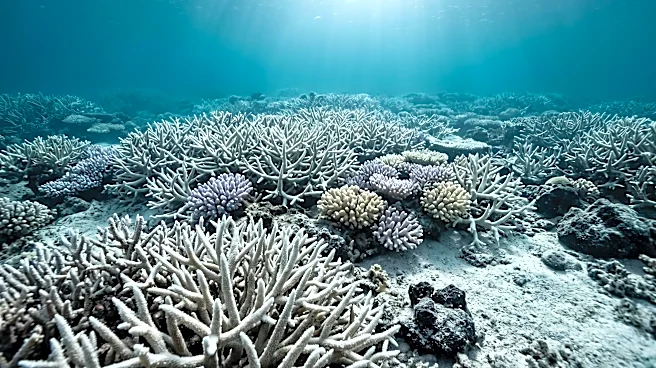
From 2014 to 2017, marine heatwaves triggered the Third Global Coral Bleaching Event, causing widespread damage to coral reefs worldwide. An analysis of 15,066 reef surveys conducted globally during this period revealed that 80% of surveyed reefs experienced
moderate or greater bleaching, defined as affecting more than 10% of corals. Additionally, 35% of these reefs suffered moderate or greater mortality. This event surpassed the damage observed in any previous global coral bleaching events. The National Oceanic and Atmospheric Administration (NOAA) has since developed more extreme Bleaching Alert levels, which are currently being utilized during the ongoing Fourth Global Coral Bleaching Event, indicating a continued and escalating threat to these vital marine ecosystems.
Why It's Important?
The severe and widespread coral reef damage during the 2014-2017 event highlights the accelerating impacts of ocean warming on marine ecosystems. Coral reefs are crucial for marine biodiversity, supporting a vast array of species and providing essential ecosystem services such as coastal protection, fisheries habitats, and tourism revenue. The significant mortality rates observed during this period indicate a substantial loss of these critical habitats, which can have cascading effects on marine food webs and the livelihoods of communities dependent on healthy reefs. The development of more extreme Bleaching Alert levels by NOAA underscores the urgency and gravity of the situation, signaling that the threat to coral reefs is intensifying and requires immediate attention and adaptive strategies.
What's Next?
The ongoing Fourth Global Coral Bleaching Event, monitored with the new, more extreme Bleaching Alert levels developed by NOAA, suggests that further widespread coral damage and mortality are likely. Scientists and conservationists will continue to monitor reef health and the progression of marine heatwaves. Efforts to mitigate ocean warming, such as reducing greenhouse gas emissions, are critical for the long-term survival of coral reefs. Additionally, local conservation efforts, including marine protected areas and restoration projects, may become increasingly important to help reefs recover and build resilience against future bleaching events. The data from these events will inform future policy decisions and conservation strategies aimed at protecting these vulnerable ecosystems.
Beyond the Headlines
The escalating frequency and severity of global coral bleaching events, as evidenced by the 2014-2017 event and the ongoing fourth event, point to a profound and potentially irreversible degradation of essential marine ecosystems. This situation raises significant ethical questions regarding humanity's responsibility to protect biodiversity and the long-term consequences of climate change on natural heritage. The economic implications extend beyond direct losses in tourism and fisheries, impacting the ecological balance of entire ocean regions. Culturally, many coastal communities have deep historical and spiritual connections to coral reefs, and their degradation represents a loss of cultural identity and traditional practices. The scientific community's continuous development of monitoring tools, like NOAA's enhanced Bleaching Alert levels, reflects a desperate race against time to understand and respond to these rapid environmental shifts.