







What's Happening?
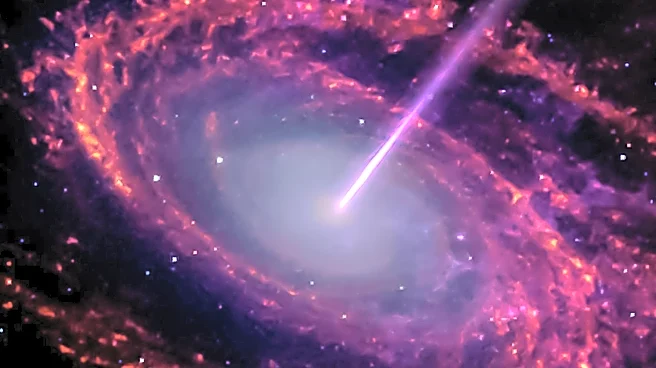
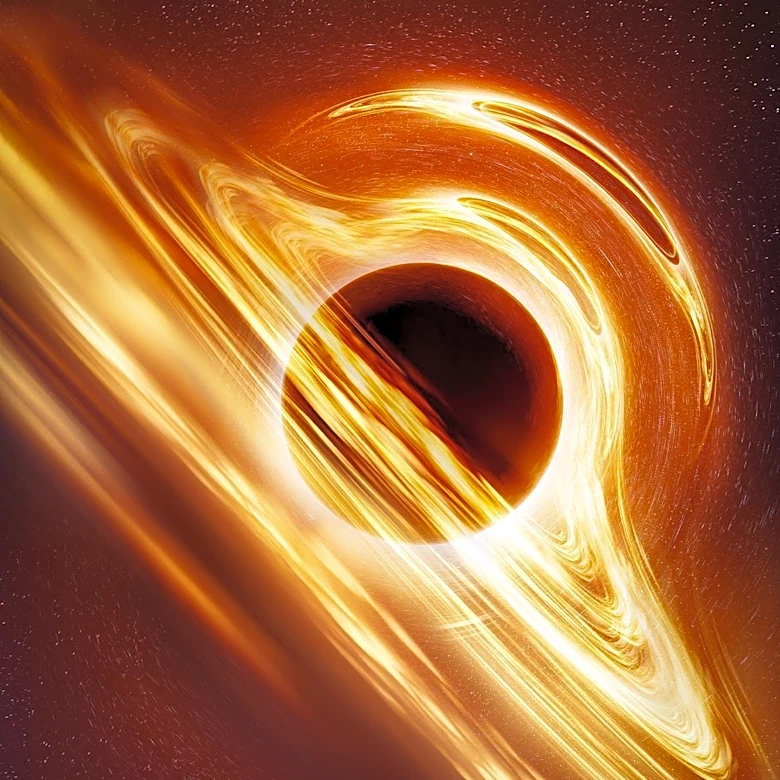
Recent astronomical research indicates that supermassive black holes significantly impact the evolution of their host galaxies through the action of their jets. These jets, also known as relativistic jets, are highly collimated, high-energy, and high-speed
outflows that stream away from the black hole. They form when material swirling close to the black hole becomes superheated, and the excess heat is expelled in these powerful streams. These jets can either suppress star formation by consuming gas intended for new stars or enhance it by energizing gas-rich regions. A study by astronomers at Arizona State University and Raman Research Institute in India, utilizing data from the Dark Energy Spectroscopic Instrument (DESI) survey and the LOFAR Two-meter Sky Survey (LoTSS), focused on the circumgalactic medium (CGM) surrounding galaxies. Their findings revealed strong signals of ionized hydrogen along the axes of radio jets, indicating that these jets heat gases in the CGM, leading to either bursts of star formation or its quenching.
Why It's Important?
The influence of supermassive black hole jets on galaxy evolution is a critical aspect of astrophysics. The ability of these jets to either stimulate or inhibit star birth directly affects the growth and characteristics of galaxies. If a black hole consumes available gas or its jets destroy gas supplies, it can profoundly slow down a galaxy's growth, potentially leading to a 'quiescent state' where few, if any, new stars form. Conversely, the energizing effect of jets on gas clouds can trigger significant star formation. This dual impact highlights the complex and powerful role that black holes, despite their relatively small size, play in shaping cosmic structures over vast distances. Understanding these mechanisms is essential for developing accurate models of how galaxies form and evolve across the universe.
What's Next?
Astronomers plan to conduct more simulations of these interactions between black hole jets and the circumgalactic medium, combining them with further observations similar to those performed with DESI and LOFAR. This ongoing research aims to build a stronger case for the observed interactions between radio jets in active galactic nuclei (AGN) and the CGM that forms halos around galaxies. Future studies will likely focus on mapping the precise conditions under which jets lead to star formation versus star quenching, and how these processes vary across different types of galaxies. The goal is to create a more comprehensive understanding of the energy transfer and material dynamics driven by supermassive black holes, ultimately refining our models of galactic evolution.
Beyond the Headlines
The profound influence of supermassive black holes on galaxy evolution raises deeper questions about the interconnectedness of cosmic phenomena. The fact that an object as comparatively small as a black hole can exert such a significant impact on structures hundreds of thousands of light-years across underscores the immense power of gravitational and energetic processes in the universe. This research also touches upon the ethical implications of scientific inquiry, as it involves understanding the fundamental forces that govern the existence and transformation of celestial bodies. The ongoing quest to unravel these mysteries not only expands our scientific knowledge but also offers a more profound perspective on our place within the vast and dynamic cosmos.