



What's Happening?
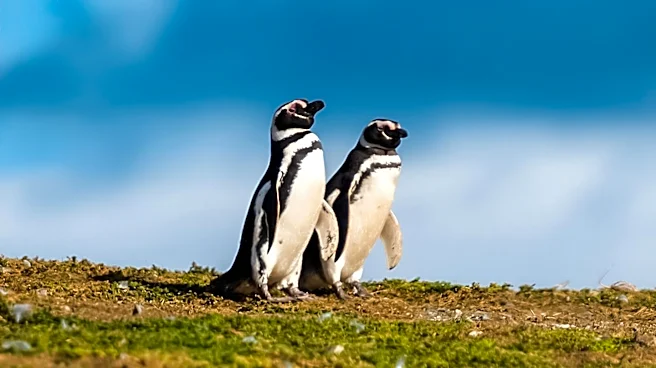
Researchers in Chile have created specialized vests, interwoven with copper and zinc, designed to accelerate the healing process for injured Humboldt penguins. This innovative approach builds on previous successes using similar garments for domestic animals
like dogs and cats to treat skin wounds. The vests are being tested at the Buin Zoo in Santiago, where measurements were taken to develop the initial bodysuits. The director of the Buin Zoo, Ignacio Idalsoaga, noted that the idea stemmed from the proven efficacy of copper and zinc microfibers in pet recovery. The experiment comes at a critical time as Chile's Humboldt penguin population faces a significant decline, with a 63% drop in active nests observed in major breeding colonies between 2024 and 2025. These penguins are vulnerable to various threats, including fishing net entanglement, plastic pollution, disease, and competition for food resources.
Why It's Important?
The development of these copper-infused vests offers a novel and potentially effective solution for rehabilitating injured Humboldt penguins, a species facing severe population decline. The use of copper and zinc in the fabric is significant because these elements are known to inhibit bacterial and fungal growth, while zinc also promotes the formation of new blood vessels, crucial for faster tissue repair. This method addresses a key challenge in penguin rehabilitation: preventing the birds from pecking at their wounds and stitches, which often hinders healing. Veterinarian Tomás Pino, who runs Conservación Humboldt, highlighted that penguins frequently twist their necks to interfere with their injuries. If successful, this technology could significantly improve the survival rates of injured penguins, contributing to conservation efforts for this vulnerable species. The initiative also showcases how interspecies medical advancements can be adapted for wildlife conservation.
What's Next?
The ongoing trials of the copper-infused vests will continue to monitor their effectiveness in treating injured Humboldt penguins. Researchers will assess how well the penguins tolerate the vests and the rate at which their wounds heal compared to traditional methods. The success of this experiment could lead to wider adoption of such specialized garments in other wildlife rehabilitation centers, particularly for species with similar challenges in wound management. Given the increasing threats to Humboldt penguins, including the disruptive effects of El Niño, which leads to more abandoned chicks with injuries, the demand for effective rehabilitation tools is growing. Future steps may involve refining the vest design, expanding the study to a larger population of penguins, and potentially adapting the technology for other aquatic birds or marine animals facing similar health issues.
Beyond the Headlines
This initiative highlights the broader implications of climate change and environmental degradation on vulnerable species. The decline of the Humboldt penguin population is exacerbated by El Niño, which warms Pacific waters and makes their primary food sources scarce, forcing parents to abandon nests and leaving chicks susceptible to injuries. The project also underscores the interdisciplinary nature of conservation, combining veterinary science, material science (with copper and zinc), and ecological understanding. Chile's role as a top copper producer adds a unique local dimension to the material choice. The ethical considerations of intervening in wildlife health are also present, balancing the benefits of rehabilitation with the potential stress on the animals. Ultimately, this effort is part of a larger global challenge to protect biodiversity in the face of human-induced environmental pressures, demonstrating how innovative solutions can emerge from unexpected collaborations.