

What's Happening?
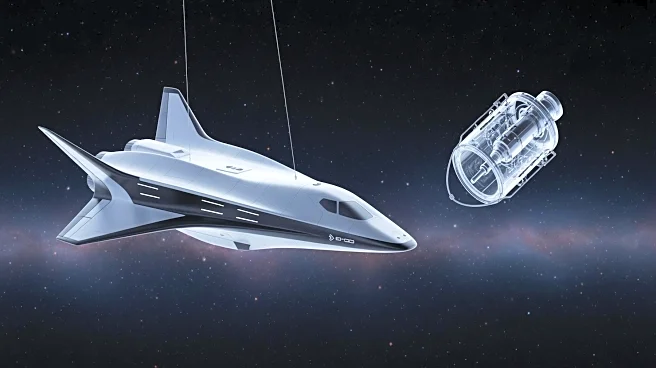
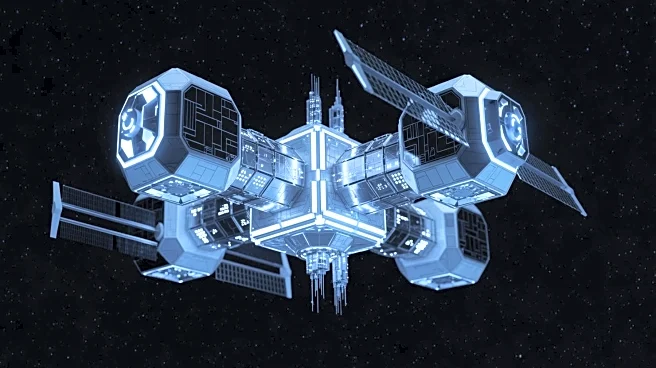
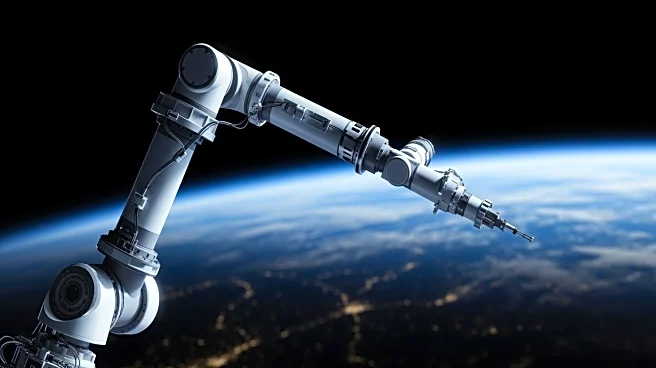
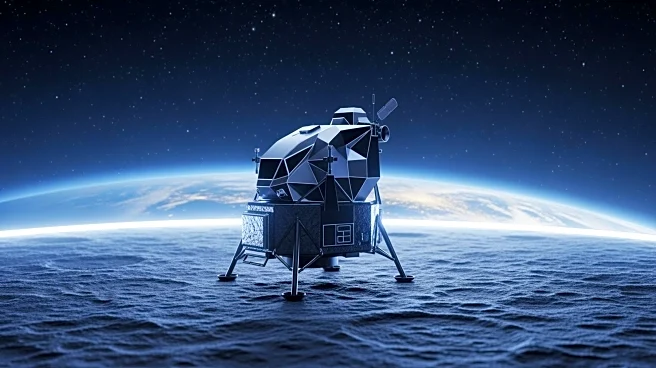
The International Space Station (ISS) is currently hosting the HTV-X1 cargo spacecraft from the Japan Aerospace Exploration Agency (JAXA), which is held by the Canadarm2 robotic arm. The spacecraft was detached from the ISS's Harmony module and is set
to be released into orbit. During this time, Japanese mission controllers will conduct a laser ranging sensor demonstration. The release is scheduled for Friday, with NASA broadcasting the event live. Meanwhile, ISS crew members are preparing for an upcoming spacewalk to install a solar array modification kit. Additionally, various scientific experiments and maintenance tasks are being conducted by the crew, including biology research and equipment servicing.
Why It's Important?
The operations involving the Canadarm2 and the HTV-X1 spacecraft highlight the ongoing international collaboration in space exploration. The successful release and subsequent experiments conducted by the HTV-X1 will contribute to scientific research and technological advancements. The spacewalk preparations are crucial for maintaining and upgrading the ISS's capabilities, ensuring its continued operation and support for scientific research. These activities demonstrate the complex logistics and coordination required for successful space missions, involving multiple international partners and advanced technologies.
What's Next?
Following the release of the HTV-X1, the spacecraft will conduct a series of remotely controlled experiments while maintaining a safe distance from the ISS. The results of these experiments will provide valuable data for future missions. The ISS crew will continue their preparations for the upcoming spacewalk, with NASA expected to announce the date and participants soon. These activities are part of the ongoing efforts to maintain and enhance the ISS's capabilities, supporting a wide range of scientific research and international cooperation in space.