


What's Happening?
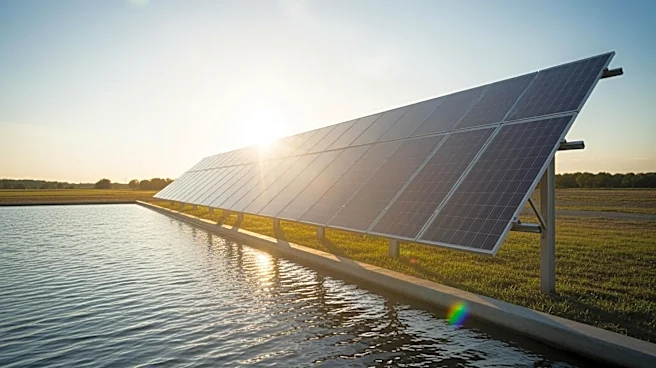
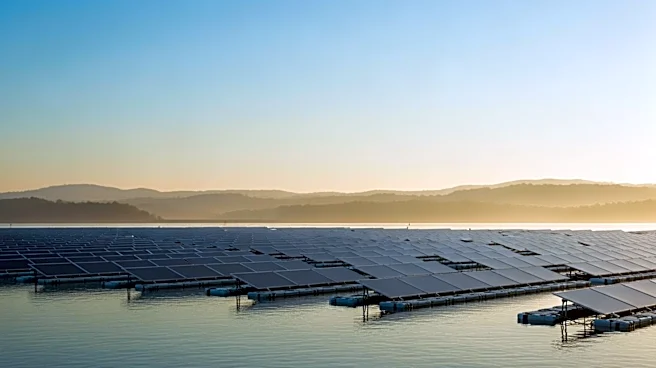
A report commissioned by Bluefield, with analysis from CBI Economics, has evaluated the potential for floating solar deployment across the UK. The study estimates that floating solar capacity could reach 3.6 GW by 2030, 18.3 GW by 2040, and exceed 40 GW by 2050.
This capacity is comparable to the UK's offshore wind capacity. The report identifies reservoir-based systems as a means to generate power close to demand centers and industrial zones. It highlights benefits such as reduced evaporation, improved water quality, and higher panel efficiency. Additionally, the report outlines cost stability and new revenue opportunities for water utilities and industrial users.
Why It's Important?
The development of floating solar technology represents a significant advancement in renewable energy, offering a sustainable solution to meet growing energy demands. By utilizing reservoirs, this technology not only generates clean energy but also enhances water management through reduced evaporation and improved quality. The projected capacity of 40 GW by 2050 could significantly contribute to the UK's energy security, reducing reliance on traditional energy sources and supporting grid stability. This development also presents economic opportunities for water utilities and industrial users, potentially leading to new revenue streams and cost savings.
What's Next?
As the UK moves towards achieving its floating solar capacity goals, stakeholders including government agencies, energy companies, and industrial users will likely engage in strategic planning and investment. The focus will be on infrastructure development, regulatory frameworks, and technological innovation to support large-scale deployment. Collaboration between public and private sectors will be crucial to overcome challenges and maximize the benefits of floating solar technology. Monitoring and evaluation of pilot projects will provide insights and guide future expansions.
Beyond the Headlines
The adoption of floating solar technology could have broader implications for global renewable energy strategies. As countries seek to balance energy needs with environmental sustainability, floating solar offers a viable solution that can be adapted to various geographical and climatic conditions. This technology could also influence policy decisions related to water resource management and energy infrastructure, promoting integrated approaches to address climate change and resource scarcity.