



What's Happening?
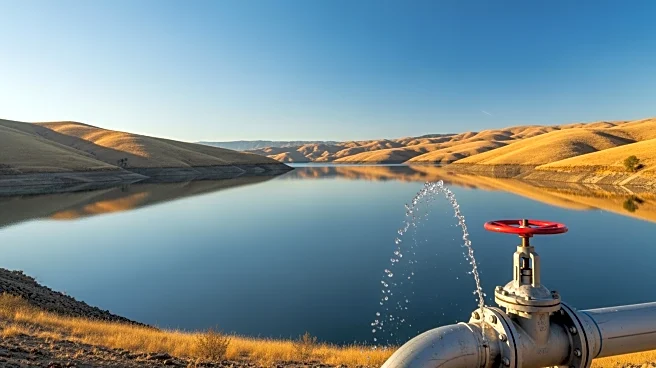
California has unveiled the California Water Plan 2028, a comprehensive strategy aimed at securing an additional nine million acre-feet of water by 2040. This initiative, equivalent to nearly 3 trillion gallons, is designed to address the state's water supply
challenges exacerbated by climate change, including shrinking snowpack and increased drought cycles. Governor Gavin Newsom emphasized the plan's importance in ensuring water reliability for California's economy and environment. The plan includes strategies such as expanding water storage, enhancing groundwater recharge, and implementing nature-based solutions. Despite recent improvements in reservoir levels, California remains vulnerable to drought, necessitating long-term structural changes to its water management systems.
Why It's Important?
The California Water Plan 2028 is crucial for maintaining the state's water security in the face of climate change. As the fourth largest economy globally, California's agricultural sector, communities, and ecosystems depend heavily on reliable water supplies. The plan's success could serve as a model for other regions facing similar climate-induced water challenges. By proactively addressing water supply gaps, California aims to mitigate the economic and environmental impacts of future droughts. The initiative also highlights the need for innovative water management practices and infrastructure modernization to adapt to changing hydrological conditions.
What's Next?
The implementation of the California Water Plan 2028 will involve collaboration among various stakeholders, including urban and agricultural water suppliers, environmental groups, and government agencies. The first major public meeting is scheduled for April, where an advisory committee will discuss the plan's next steps. The plan's progress will be closely monitored, with adjustments made as necessary to address emerging challenges. Additionally, the plan's alignment with Senate Bill 72 will ensure a coordinated approach to statewide water planning, data collection, and infrastructure improvements.