



What's Happening?
Researchers from the University of São Paulo, the Federal University of Espírito Santo, and the University of Santiago de Compostela have conducted a study on the safety of crops grown near the Doce River estuary in Brazil. This area has been contaminated
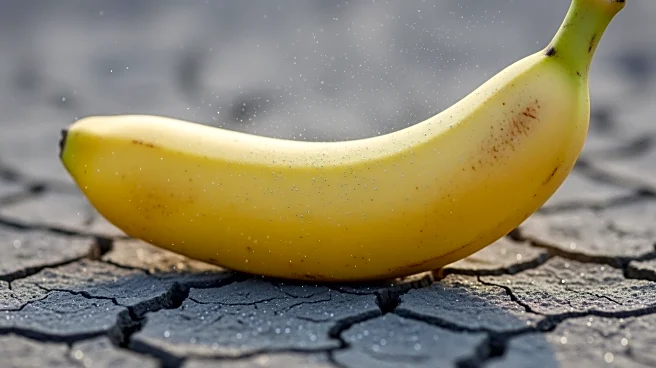
with iron mining waste since the Fundão tailings dam collapse in 2015. The study focused on bananas, cassava, and cocoa pulp, revealing that these crops absorb toxic metals such as cadmium, chromium, copper, nickel, and lead from the contaminated soil. The findings indicate a potential health risk, particularly for children under six, due to elevated levels of these metals in bananas. The research highlights the movement of potentially toxic elements from soil to plants and their entry into the human food supply.
Why It's Important?
The study underscores the long-term health risks associated with consuming food grown in contaminated environments. The presence of toxic metals in crops like bananas poses a significant health threat, especially to young children, who are more vulnerable to the effects of heavy metal exposure. This situation raises concerns about food safety and public health, emphasizing the need for stringent monitoring and regulation of agricultural practices in contaminated areas. The research also highlights the broader implications of environmental disasters on food security and health, urging policymakers to address contamination issues to protect public health.
What's Next?
The study suggests the need for ongoing monitoring of crops grown in contaminated areas to assess the long-term health risks. There may be calls for stricter regulations and remediation efforts to prevent further contamination and protect public health. Additionally, the findings could lead to increased public awareness and demand for safer agricultural practices. Researchers may continue to explore the impact of environmental contamination on food safety and develop strategies to mitigate these risks.