







What's Happening?
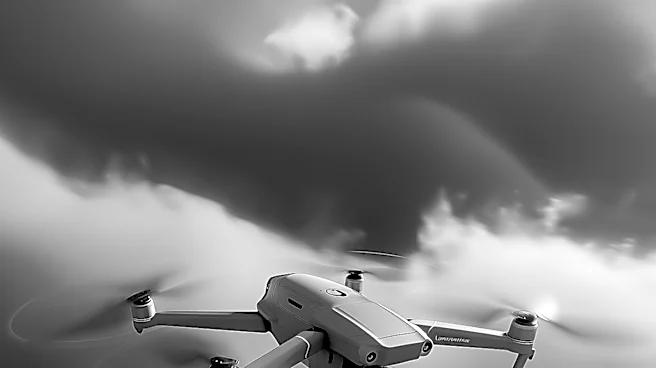
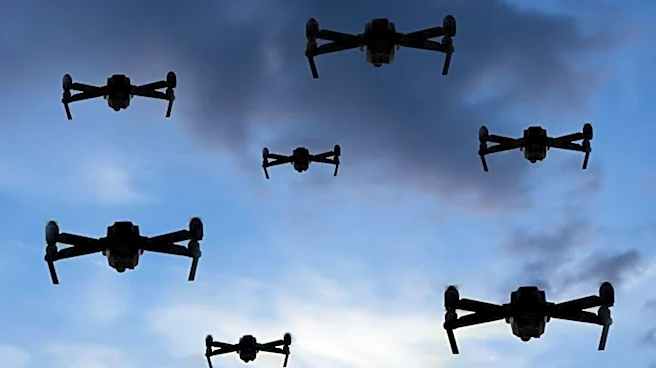
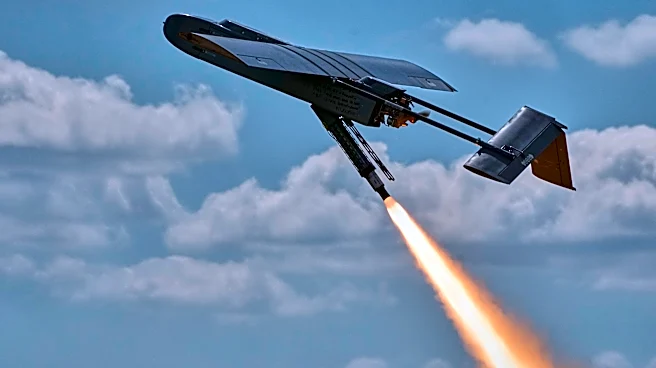
Ukrainian forces executed one of their largest drone attacks on Russia since the 2022 invasion, deploying nearly 800 drones, primarily targeting the Moscow region. This comes just two days after a similar, significant drone salvo. Russian air defenses
reportedly intercepted 791 Ukrainian drones over various Russian regions, including annexed Crimea and the Black and Azov seas. Moscow Mayor Sergei Sobyanin stated that over 600 drones flew towards the Moscow region, with 180 being shot down. Despite the scale, Russian officials reported no deaths or major damage in Moscow, though three people were wounded in the Moscow region and three in the Ryazan region. A fire also broke out at a warehouse belonging to Wildberries, Russia’s largest online retailer, which Ukraine claims helps supply the Russian military. Concurrently, a Russian missile strike on the village of Pechenihy in Ukraine’s northeastern Kharkiv region killed at least 10 civilians and wounded eight others, according to Oleh Syniehubov, head of the Kharkiv regional military administration. The attack destroyed homes, a cafe, a post office, a store, and several vehicles. Ukrainian President Volodymyr Zelensky condemned the Russian strike as 'brutal' and vowed a response.
Why It's Important?
This escalating exchange of long-range aerial strikes highlights a significant shift in the nature of the conflict, as both sides increasingly target each other's territories away from the front lines. Ukraine's strategy of deploying large numbers of domestically produced drones aims to make the war's consequences felt by the Russian public and pressure President Vladimir Putin into peace negotiations. The targeting of civilian infrastructure, such as the Wildberries warehouse, suggests an intent to disrupt Russian logistics and economy. Conversely, Russia's missile strike on Pechenihy demonstrates its continued willingness to target Ukrainian civilian areas, leading to tragic loss of life and destruction. The inability of either side to make significant battlefield progress on the roughly 780-mile front line, due to the prevalence of drones and ground robots, underscores the strategic importance of these long-range attacks. This dynamic suggests a prolonged conflict where technological superiority in drone warfare and the ability to withstand sustained aerial assaults will be crucial.
What's Next?
The immediate future will likely see continued escalation in long-range aerial attacks from both Ukraine and Russia. Ukrainian officials have explicitly stated their intention to respond to the Russian strike in Kharkiv, suggesting further drone attacks on Russian territory are imminent. Russia is also expected to continue its missile and drone campaigns against Ukrainian cities and infrastructure. The effectiveness of Ukraine's drone technology and its ability to overwhelm Russian air defenses will be closely watched, as will Russia's capacity to protect its critical infrastructure. The international community will likely continue to condemn attacks on civilians, but direct intervention in the aerial duel remains unlikely. The ongoing strikes could further entrench public sentiment in both countries, making a negotiated peace settlement more challenging. The focus will remain on how these aerial campaigns impact the broader war effort and whether they can break the current stalemate on the ground.
Beyond the Headlines
The increasing reliance on drone warfare in this conflict has profound implications for future military strategies and international law. Ukraine's development and deployment of sophisticated, domestically produced long-range drones could serve as a blueprint for other nations facing larger adversaries, emphasizing asymmetric warfare capabilities. The targeting of civilian areas, even if indirectly, raises complex ethical questions about proportionality and civilian protection in modern warfare. The muted coverage of the drone attack in Russian state media, contrasted with its prominence in independent and pro-Kremlin outlets, highlights the ongoing information war and the challenges of maintaining public morale and control over narratives. This conflict is not only a test of military might but also of societal resilience and the ability of governments to manage public perception amidst sustained attacks. The long-term psychological impact on populations living under constant threat of aerial strikes, in both Ukraine and Russia, will be a significant societal challenge.