




What's Happening?
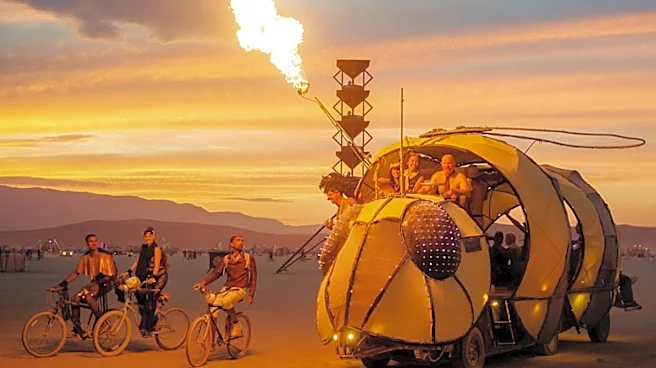
The Burning Man Project is expanding its commitment to sustainability by launching a more formal Regeneration Innovation Lab in 2027. This initiative builds on years of prototyping clean energy technologies and rethinking essential services within Black
Rock City, the temporary metropolis created for the annual event. Since releasing its 2030 Environmental Sustainability Roadmap in 2019, Burning Man has served as a unique testing ground for innovators to develop solutions for pressing global challenges, particularly in decarbonization. In 2026, participants tested cleaner energy systems and explored collaborative approaches to living more sustainably. Dwight Collins, Dean Emeritus of the Presidio Center for Sustainable Solutions, noted that Burning Man's work extends beyond regenerating nature to regenerating people, fostering collective action and a sense of shared responsibility. Black Rock Labs, a nonprofit co-founded by David Shearer, utilizes the harsh playa environment to test innovations like carbon capture machines, aiming to transform carbon dioxide from a problem molecule into a valuable product, such as dry ice for refrigeration in remote areas.
Why It's Important?
This initiative is significant because it leverages a unique cultural event as a large-scale innovation laboratory for sustainable technologies and community resilience. By providing a real-world, albeit temporary, urban environment, Burning Man enables rapid prototyping and testing of solutions that can address critical global issues like climate change and energy access. The focus on decarbonization and decentralized energy systems offers practical models for reducing reliance on fossil fuels, which has broad implications for industries, public policy, and urban planning. The project's success in testing battery storage units and solar/hybrid systems, as seen with Sunbelt Rentals and Overdrive Energy Solutions, demonstrates scalable solutions for large events and disaster response. Furthermore, the emphasis on 'regenerating people' highlights the social and cultural dimensions of sustainability, fostering collective problem-solving and inspiring participants to apply these learnings in their home communities, thereby creating a ripple effect of positive change.
What's Next?
The formal launch of the Regeneration Innovation Lab in 2027 will likely accelerate the development and deployment of sustainable technologies within Black Rock City and beyond. Innovators are encouraged to get involved by emailing regeneration@burningman.org. Black Rock Labs plans to bring a carbon capture machine prototype to the playa in 2027, with the goal of applying lessons learned to help communities refrigerate essential supplies without electricity. The data collected from power grid measurements and new technologies will continue to inform improvements in energy efficiency and fuel consumption, potentially setting new standards for large-scale events. Collaborations with organizations like Sunbelt Rentals and Overdrive Energy Solutions are expected to expand, further advancing mobile energy systems for various applications, including emergency response and critical facility backup power. The project aims to continue fostering a culture of experimentation and knowledge sharing, influencing how other events and communities approach their energy needs and sustainability goals.
Beyond the Headlines
The Burning Man Project's regenerative future initiative delves into deeper implications beyond technological advancements. It challenges conventional notions of urban development and resource management by demonstrating that a temporary city can operate with a strong commitment to environmental stewardship and collective well-being. Ethically, it promotes a philosophy of 'leave no trace' and active participation in creating a sustainable future, encouraging individuals to take responsibility for their environmental impact. Culturally, it fosters a unique blend of art, technology, and community, where innovation is driven by shared values and a desire for a better world. The idea of 'regenerating people' suggests a long-term shift in human consciousness, where individuals are empowered to become agents of change in their own communities. This model could inspire other large-scale gatherings and temporary settlements to adopt similar regenerative principles, ultimately contributing to a broader cultural shift towards sustainability and collective problem-solving.