








What's Happening?
Douglass Cemetery, a historic pioneer burial ground in Kansas City, Missouri, is facing an uncertain future due to a proposed 19-acre development by Milhaus. The development plans call for the construction of nine buildings and 288 residential units surrounding
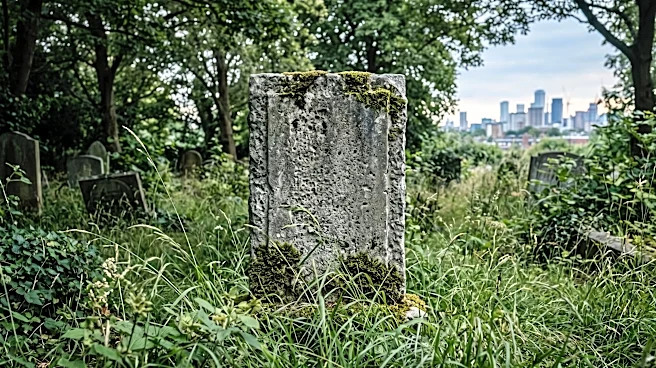
the cemetery, which has been largely neglected and overgrown. Neighbors and local historians have raised concerns about the accuracy of the developer's survey of the cemetery's boundaries, arguing that the proposed 5,500 square feet allocated for the cemetery is significantly smaller than its original 1.5-acre tract. Evidence, including a discovered headstone outside the developer's marked perimeter, suggests that burials extend beyond the currently designated area. The cemetery holds the remains of numerous pioneers, including members of the Douglass family and a Civil War veteran, Moses Agers, whose presence in a pro-slavery area remains a mystery. The site has also suffered from vandalism and neglect over the decades, with some headstones missing or damaged.
Why It's Important?
The situation at Douglass Cemetery highlights broader issues concerning the preservation of historical sites and the impact of urban development on cultural heritage in the U.S. The potential encroachment on the cemetery raises ethical questions about respecting ancestral burial grounds and the historical narratives they represent. For the local community, the development threatens not only a physical space but also the collective memory and identity tied to the pioneers buried there. The dispute over the cemetery's boundaries and the developer's plans could set a precedent for how similar historical sites are treated in rapidly developing urban areas. It underscores the need for thorough archaeological surveys and community engagement to ensure that progress does not come at the expense of historical preservation and respect for the deceased. The outcome of this situation could influence future development projects in areas with historical significance across the nation.
What's Next?
Milhaus, the developer, is currently evaluating new information regarding the cemetery's land titles and boundaries, as it conflicts with their initial documentation. Community members, particularly the Boone Hills Neighborhood Association, are advocating for a proper archaeological survey, including ground-penetrating radar (GPR), to accurately identify all burial sites within the cemetery's original 1.5-acre footprint. While Milhaus has expressed concerns about the inconclusive nature of GPR due to soil conditions and overgrowth, and the need for significant tree clearing, neighbors contend that tree clearing has already occurred near the cemetery. The developer aims to break ground in late 2027. Future steps will likely involve continued dialogue between Milhaus, the neighborhood association, and city planning officials to resolve the discrepancies in land surveys and ensure the appropriate preservation of Douglass Cemetery.
Beyond the Headlines
The struggle to preserve Douglass Cemetery reflects a recurring tension between urban expansion and the protection of historical and sacred spaces. This case brings to light the often-overlooked legal and ethical complexities surrounding abandoned or neglected cemeteries, particularly when their boundaries are poorly documented or disputed. The disappearance of headstones, the mystery of certain burials, and the general disrepair of the cemetery underscore a broader societal challenge in maintaining historical integrity in the face of modern development pressures. It also raises questions about the responsibility of developers and local governments to conduct comprehensive historical and archaeological assessments before initiating projects that could impact such sites. The outcome here could influence policy discussions on how to balance affordable housing needs with the imperative to protect cultural heritage, potentially leading to more stringent regulations for development near historical burial grounds.