



What's Happening?
Vermont fishery officials are expressing significant concern over the U.S. Fish and Wildlife Service's plans to place the White River National Fish Hatchery in Bethel on inactive status. This development comes after a letter was sent to U.S. Fish and Wildlife Service Director
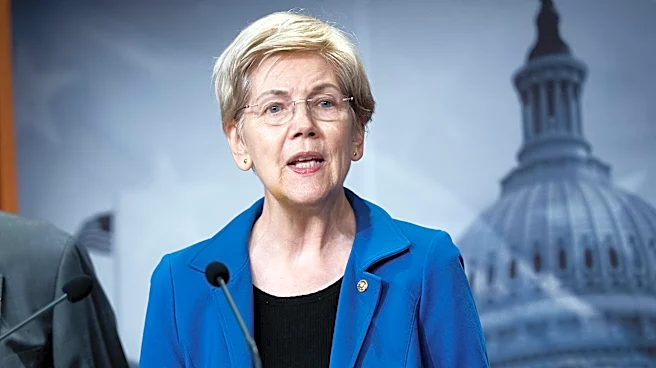
Brian Nesvik by a congressional delegation including U.S. Sens. Peter Welch, Chuck Schumer, Bernie Sanders, and Kirsten Gillibrand, and U.S. Rep. Becca Balint, urging the director to reverse the decision. The hatchery plays a crucial role in maintaining fish populations in Vermont and New York, contributing to the restoration and conservation of lake trout in the lower Great Lakes and landlocked Atlantic salmon in Lake Champlain. State officials, such as Dylan Sickles, fish culture operations manager for the Vermont Fish & Wildlife Department, indicate that the state's five hatcheries are already operating at full capacity and may not be able to absorb the additional responsibilities without impacting existing programs. Federal officials have not publicly detailed how the hatchery's work will be managed after deactivation, leading to uncertainty about the future of cooperative programs between state and federal agencies.
Why It's Important?
The potential closure of the White River National Fish Hatchery carries significant implications for fish conservation efforts and the ecological balance in Vermont and surrounding regions. The hatchery is vital for providing brook trout eggs to state hatcheries and supporting the restoration of lake trout and Atlantic salmon populations. Its deactivation could strain the already at-capacity state hatcheries, potentially leading to a reduction in fish stocking programs and hindering ongoing conservation initiatives. The facility also serves as a research hub for universities like Concordia, Purdue, Boston University, and Dartmouth College, meaning its closure could impact scientific studies related to aquatic ecosystems. Furthermore, the historical context of the hatchery, established in 1984 to support the revival of fish populations after their disappearance around 1900, underscores its long-term importance. The lack of clear plans from federal officials regarding the transfer of responsibilities creates uncertainty for state agencies and could jeopardize decades of collaborative conservation work.
What's Next?
The immediate next steps involve continued advocacy from the congressional delegation and state officials to persuade the U.S. Fish and Wildlife Service to rescind its decision. Vermont fishery officials will likely seek more clarity from federal authorities on how the hatchery's critical functions will be managed if it is placed on inactive status. Without a reversal, the state may need to assess the feasibility of its existing hatcheries taking on additional workloads, which could necessitate re-evaluating current stocking programs and conservation priorities. Stakeholders, including local communities, environmental groups, and academic researchers, are expected to monitor the situation closely and may engage in further efforts to highlight the hatchery's importance. The outcome will depend on whether federal officials respond to the concerns raised and provide a viable plan for maintaining the essential services currently provided by the White River National Fish Hatchery.
Beyond the Headlines
The situation with the White River National Fish Hatchery highlights broader issues concerning federal funding and resource allocation for environmental conservation programs. The decision to place a vital facility on inactive status, especially one that has undergone significant renovations after natural disasters, raises questions about the long-term sustainability of national fish hatchery systems and their resilience to budget cuts or policy changes. It also underscores the delicate balance between federal and state responsibilities in managing natural resources. The potential loss of the hatchery's capacity could have cascading effects on biodiversity, recreational fishing industries, and the overall health of aquatic ecosystems in the region. This event could serve as a case study for examining the impact of federal decisions on local environmental initiatives and the importance of inter-agency cooperation in conservation efforts, particularly in the face of increasing environmental challenges like climate change and invasive species.