



What's Happening?
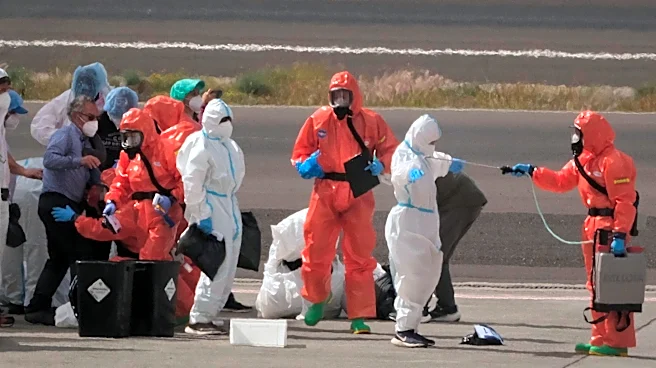
A hantavirus outbreak on a Dutch cruise ship has raised concerns due to its resemblance to the early stages of the COVID-19 pandemic. Health officials in personal protective equipment and quarantined patients have drawn comparisons to the initial COVID-19 response.
However, medical experts emphasize that the hantavirus is not likely to pose a similar pandemic risk. The virus is typically contracted through contact with infected rodents, and while the strain on the cruise ship can pass from person to person, it requires very close contact. The Centers for Disease Control and Prevention (CDC) has stated that there is no current risk to the U.S. population. Health officials are coordinating with international bodies to manage the outbreak and repatriate passengers safely.
Why It's Important?
The hantavirus outbreak highlights the importance of preparedness and swift response in managing infectious diseases. While the risk of a widespread outbreak is low, the situation serves as a reminder of the need for vigilance in monitoring and containing potential health threats. The comparison to COVID-19 underscores the psychological impact of past pandemics on public perception and the importance of clear communication from health authorities. The outbreak also emphasizes the role of international cooperation in addressing global health challenges and ensuring the safety of affected individuals.
What's Next?
Health authorities will continue to monitor the situation and implement measures to prevent further spread of the virus. The focus will be on ensuring that affected individuals receive appropriate care and that repatriation efforts are conducted safely. Public health messaging will be crucial in managing public perception and preventing unnecessary panic. The situation may prompt a review of protocols for handling infectious disease outbreaks on cruise ships and other high-risk environments.