


What's Happening?
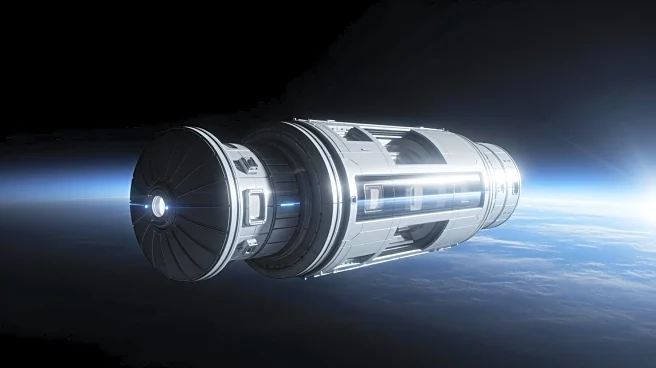
Max Space, a startup focused on space habitats, has announced plans for its innovative Thunderbird Station, an inflatable space habitat designed to expand significantly once in orbit. This concept aims to provide astronauts with more room and privacy,
featuring reconfigurable interiors and large windows for viewing Earth and space. The Thunderbird Station is set to launch by 2029 using a SpaceX Falcon 9 rocket, offering a third of the volume of the International Space Station (ISS) with just a single launch. This development comes as NASA revises its Commercial Low Earth Orbit Destinations (CLD) program, seeking private industry solutions to replace the ISS, which is scheduled for retirement in five years. Max Space's proposal is part of a broader effort to ensure continued scientific experimentation in space.
Why It's Important?
The introduction of inflatable space habitats like Thunderbird Station represents a significant shift in space exploration and habitation. As the ISS nears retirement, NASA's reliance on private industry to develop successors is crucial for maintaining a presence in low Earth orbit. Max Space's concept could revolutionize how space habitats are constructed, offering more efficient and cost-effective solutions. This could lead to increased opportunities for scientific research and commercial activities in space, potentially benefiting industries involved in space technology and exploration. The success of such initiatives could also pave the way for future missions to the Moon and Mars, expanding human presence beyond Earth.
What's Next?
Max Space plans to launch a scaled-down prototype of its inflatable habitat by early 2027, testing its viability in space. Key challenges include ensuring the habitat can withstand micrometeoroid impacts and space debris, which are critical for its long-term sustainability. As the company progresses, it may explore applications for lunar and Mars missions, further expanding its potential impact on space exploration. Stakeholders, including NASA and other space agencies, will likely monitor these developments closely, considering their implications for future space missions and international collaboration.
Beyond the Headlines
The development of inflatable space habitats raises questions about the future of space governance and international cooperation. As private companies like Max Space enter the arena, regulatory frameworks may need to adapt to ensure safe and equitable use of space resources. Additionally, the potential for these habitats to be used in lunar and Mars missions highlights the need for international agreements on space exploration and resource utilization. Ethical considerations regarding the commercialization of space and its impact on scientific research may also emerge as these technologies advance.