






What's Happening?
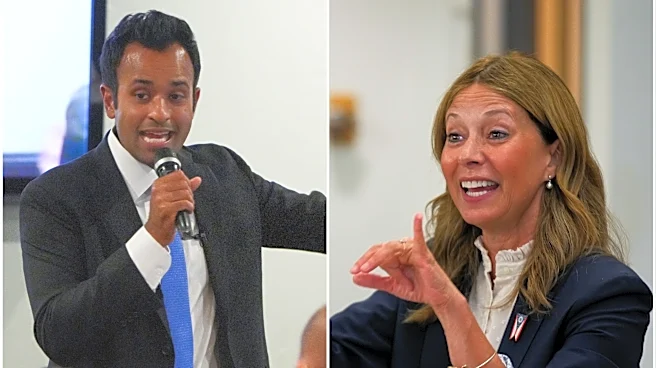
Both leading candidates for Ohio governor are advocating for a pause in the rapid expansion of data centers within the state, despite holding significant personal investments in the very industry they seek to regulate. Republican Vivek Ramaswamy and Democrat
Dr. Amy Acton have expressed concerns about the impact of data centers on utility bills, air quality, and water infrastructure. Ramaswamy's financial disclosures reveal a large portfolio with over a dozen holdings in companies tied to data centers, including NVIDIA, Microsoft, and Amazon. A 2023 federal tax filing indicated Ramaswamy held up to $5 million in Microsoft alone. Dr. Acton's financial report also shows technology-related holdings, including Iron Mountain, which operates a data center in Ohio. These investments raise questions about potential conflicts of interest, as the governor oversees agencies that regulate data centers and determine tax incentives.
Why It's Important?
The financial ties of Ohio's gubernatorial frontrunners to the data center industry are significant because the governor holds substantial power over the regulation and incentivization of these tech hubs. As noted by Caitlin Johnson of Innovation Ohio, the governor has "oversight of the agencies that regulate data centers and determine whether or not to give them tax breaks." This creates a potential conflict of interest where personal financial gains could influence policy decisions regarding an industry that has environmental and economic impacts on Ohioans. The rapid expansion of data centers has led to concerns about increased utility bills, air pollution, and strain on water infrastructure, directly affecting residents. If elected, the candidates' investments could lead to public skepticism regarding the impartiality of their regulatory actions, potentially undermining trust in state governance and the fairness of economic development policies.
What's Next?
The candidates have not yet responded to inquiries about divesting from their data-center-related holdings if elected governor, though Dr. Acton's campaign stated she would not invest in individual stocks as governor. The issue of their investments is likely to remain a point of contention as the November election approaches, with activists and progressive organizations like Innovation Ohio highlighting the potential for conflicts of interest. The debate will continue to focus on how to balance technological expansion with environmental and economic concerns for Ohio residents. Future policy discussions will likely involve the implementation of conditional moratoriums on new data centers, as proposed by both candidates, and the development of frameworks to ensure that data center companies contribute fairly to the communities they operate in, particularly regarding energy consumption and infrastructure costs.
Beyond the Headlines
This situation highlights a broader ethical challenge in modern politics: the intersection of personal wealth, investment, and public office, particularly in rapidly growing and impactful sectors like technology. The increasing financialization of political figures' lives, especially those with significant business backgrounds, can blur the lines between public service and private gain. This raises fundamental questions about transparency, accountability, and the potential for regulatory capture. The public's perception of fairness and impartiality in governance is crucial, and when leaders stand to benefit financially from industries they regulate, it can erode public trust. This scenario also underscores the need for robust ethical guidelines and disclosure requirements for public officials, ensuring that their decisions are made in the best interest of their constituents rather than their personal portfolios.