



What's Happening?
U.S.-China relations in 2026 have demonstrated a surprising degree of short-term resilience despite ongoing global economic shocks and geopolitical tensions. Discussions at the U.S.-China Global Economic Order (GEO) Dialogue revealed that while both sides
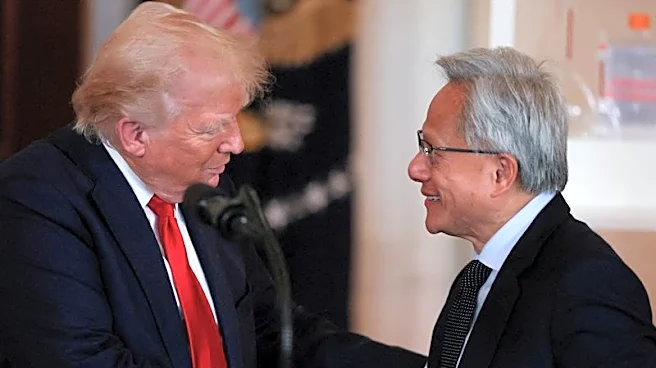
acknowledge unprecedented turbulence, the global market has shown resilience. A key factor in this resilience is the massive opportunity presented by AI development and investment in the United States, though tempered by warnings from figures like Anthropic CEO Dario Amodei about the need to 'pace the frontier.' Participants noted that China's AI advantages lie primarily in applications and integration, while U.S. models remain at the frontier, backed by heavy capital investment. The year also saw direct engagements between President Trump and President Xi Jinping, including visits to Beijing and Washington, and planned attendance at APEC and G20 summits, contributing to a tactical truce in trade relations.
Why It's Important?
The resilience in U.S.-China relations and the global economic order is crucial for international stability and economic growth. The continued engagement between the two superpowers, despite underlying competition, signals a commitment to managing potential conflicts and maintaining open channels of communication. The focus on AI development highlights its role as both a driver of economic opportunity and a source of potential risk, influencing strategic competition between the U.S. and China. The differing strengths in AI, with the U.S. leading in frontier models and China in applications, suggest a complex technological landscape where collaboration and competition coexist. The tactical truce in trade, while not a permanent resolution, provides a period of stability that benefits global markets and allows for continued economic activity, preventing a more severe breakdown of the international system.
What's Next?
The tactical truce in U.S.-China trade relations, extended until January 10, 2027, will require continued active management and signaling from both sides. Upcoming events like the APEC summit in Shenzhen and the G20 Leaders’ Summit in Miami will provide further opportunities for engagement between President Trump and President Xi. The ongoing development of AI will remain a critical area of both cooperation and competition, with continued heavy investment in data centers and leading-edge chips in the U.S., and a focus on AI applications in China. The discussions at the GEO Dialogue suggest that while short-term resilience is evident, the long-term reordering of the global economic system, driven by security considerations and a redefinition of efficiency, rules, and openness, will continue to unfold.
Beyond the Headlines
The observed resilience in the global economic order, despite significant shocks, points to the deep interconnectedness of the U.S. and Chinese economies and the broader international system. This 'stability through reorganization' suggests that while the existing order is under duress, its inherent stickiness and institutional inertia prevent a rapid collapse. The role of AI as a transformative technology is central to this dynamic, driving both economic growth and strategic competition. The cautious approach to AI development, as advocated by figures like Dario Amodei, underscores the ethical and existential considerations that accompany technological advancement. This complex interplay of economic interdependence, technological competition, and strategic diplomacy will continue to shape the future of U.S.-China relations and the global economic order, with implications for trade, finance, and technological governance worldwide.