






What's Happening?
Residents in Keyport, New Jersey, are expressing frustration and concern over potential health impacts from a toxic landfill, with Representative Frank Pallone Jr. advocating for a comprehensive evaluation of cancer rates in the community. Despite months
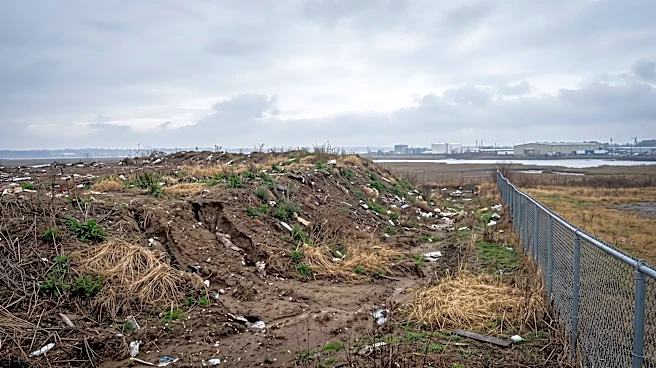
of soil and water testing at the Aeromarine Industrial Park and the adjacent Keyport Sanitary Landfill, residents feel that their questions regarding a possible cancer cluster remain unanswered. Contaminants such as arsenic, PFAS 'forever chemicals,' and benzene have been detected on the property. The landfill, which ceased operations in 1979, was never properly sealed or remediated to modern standards. Local residents, including Salvatore Liguori Jr., who lives next to the Aeromarine site and has cancer, are pushing for answers and cleanup, citing numerous cancer cases in the community. Environmental experts from the New Jersey Department of Environmental Protection (DEP) state that they have not found a direct exposure pathway between the industrial park, landfill, and nearby residents, noting that groundwater flows away from neighborhoods. However, residents question these conclusions, particularly concerning potential toxic vapors and the impact of storms on the eroding landfill.
Why It's Important?
This situation highlights significant public health and environmental justice concerns in U.S. communities located near historical industrial sites. The call by Representative Pallone for an evaluation of cancer rates underscores the growing demand for accountability from environmental agencies and property owners regarding long-term environmental contamination. The presence of 'forever chemicals' like PFAS, along with arsenic and benzene, poses serious health risks, and the perceived lack of clear answers from environmental authorities can erode public trust. The ongoing struggle of Keyport residents to get definitive answers and remediation for a landfill that ceased operations decades ago reflects a broader national challenge in addressing legacy pollution. This case could set a precedent for how state and federal agencies respond to community-led demands for health impact assessments and environmental cleanup, particularly in areas with a history of industrial activity and potential health disparities.
What's Next?
The investigations into the Keyport landfill and surrounding areas are expected to continue, with some sites slated for retesting, particularly in Union Beach where benzene was found. The state Department of Health is anticipated to begin its review and report on contamination in Keyport once all environmental tests are complete. Representative Pallone's push for an evaluation of cancer rates suggests that further health studies are likely to be a key next step, aiming to determine if the observed cancer cases are disproportionate. There is also a potential sale and redevelopment deal involving Pacer Group Holdings LLC, which could lead to a remediation plan for the property. However, former Keyport Mayor John Merla emphasizes the need to compel the current property owner, Bay Ridge Realty, to clean up the site, given that past fines have not spurred action. The community's continued advocacy will be crucial in ensuring that these issues are addressed.
Beyond the Headlines
The Keyport landfill situation delves into the complex interplay between historical industrial practices, environmental regulation, and community health. The residents' frustration points to a systemic issue where the burden of proof often falls on affected communities to demonstrate a link between environmental contamination and health outcomes. The debate over 'exposure pathways' versus observed health issues raises ethical questions about how environmental agencies define and address risk, especially when long-term, low-level exposures are involved. This case also highlights the challenge of remediating sites where the original polluters may no longer be directly accountable or where the costs of cleanup are substantial. The community's sustained activism, despite decades of inaction, underscores the power of grassroots movements in pushing for environmental justice and demanding that public health be prioritized over economic or regulatory inertia. The outcome in Keyport could influence future policies on brownfield remediation and public health monitoring in similar communities across the U.S.