



What's Happening?
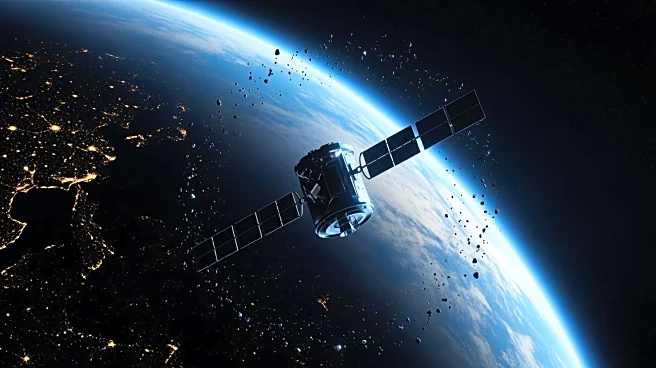
On December 21, 2025, SpaceX's Starlink satellite 35956 was reported to be tumbling toward Earth following an on-orbit anomaly. The incident began on December 17, when communications with the satellite were lost, and it was discovered that venting from
its propulsion tank had occurred. This led to a rapid change in its orbit and the release of a small debris field. Despite the anomaly, the satellite is largely intact, according to imagery from Vantor's WorldView-3. The satellite is expected to reenter Earth's atmosphere and fully demise within weeks, posing no risk to the International Space Station.
Why It's Important?
The incident highlights the growing concerns over space traffic management and orbital debris, especially as Starlink operates the world's largest satellite constellation in a crowded low Earth orbit. The event underscores the need for improved coordination and deconfliction procedures among satellite operators. With tens of thousands of objects tracked in LEO, even minor anomalies can escalate into systemic risks. The situation also emphasizes the importance of rapid-response imagery in assessing satellite conditions and narrowing down possible failure modes.
What's Next?
SpaceX is coordinating with NASA and the U.S. Space Force to monitor the debris and identify the root cause of the anomaly. The company is deploying software changes across its fleet to prevent similar incidents. Over the coming days, updates are expected regarding the number of trackable fragments, reentry forecasts, and further details on the failure's root cause. The incident serves as a test of global data sharing and response coordination in maintaining the usability of LEO.
Beyond the Headlines
The Starlink incident draws attention to the unprecedented scale of satellite constellations and the challenges they pose to space safety. It follows recent warnings about the need for better coordination among operators, as more countries and companies deploy large constellations. The event is a reminder of the critical infrastructure role LEO plays and the importance of managing space traffic effectively to prevent systemic risks.