






What's Happening?
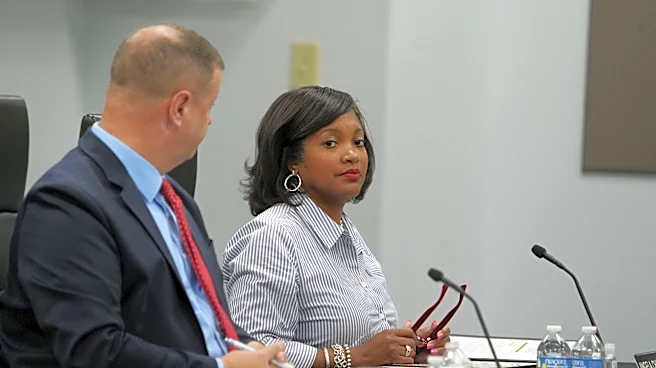
Minneapolis Public Schools Superintendent Lisa Sayles-Adams is scheduled to present three options for restructuring the district's school system at the Minneapolis Board of Education meeting. These proposals could lead to school closures, the relocation
of academic programs, or changes in student attendance. The complete details of these options have not yet been made public, leaving families and employees unaware of which schools might be affected. Superintendent Sayles-Adams has indicated that the proposals will involve significant changes, acknowledging that some recommendations may be well-received while others could cause anxiety within school communities. The school board had previously directed the superintendent in June to develop these options as part of its School Transformation process. This initiative aims to address several challenges, including declining enrollment, unequal access to academic programs, recurring budget reductions, and the financial burden of maintaining more buildings than the current student population efficiently supports. The district defines a school operating below 70 percent of its enrollment capacity as underutilized. Reports indicate that three middle schools are operating at or below 50 percent capacity, and seven of the district's eight high schools are reportedly at 60 percent enrollment or lower.
Why It's Important?
The proposed restructuring of Minneapolis Public Schools carries significant implications for the city's educational landscape and its communities. Declining enrollment and budget constraints are pressing issues that, if unaddressed, could lead to continued financial instability and an inability to provide consistent educational opportunities across the city. The district's current underutilization of school buildings, with several middle and high schools operating well below capacity, highlights an inefficient allocation of resources. While school closures could offer financial savings and potentially allow for more efficient distribution of students, teachers, and specialized programs, they also risk disrupting established school communities and neighborhood relationships. Historically, previous restructuring decisions in Minneapolis have led to mistrust, particularly among families in Black, Indigenous, immigrant, and low-income neighborhoods, who feel they have disproportionately borne the brunt of school closings and program changes. This history underscores the need for transparent communication and careful consideration of community impact to avoid exacerbating existing inequities and fostering further distrust.
What's Next?
Following Superintendent Sayles-Adams' presentation, the Minneapolis Board of Education is not expected to make an immediate final decision. Instead, board members will review the three proposed options and gather public feedback. This public engagement phase will be crucial for affected communities to voice their concerns and perspectives on the potential changes. The district aims to implement any approved changes in time for the 2027–28 school year. Key details that will need to be reported once the plans are released include the specific schools and programs involved, estimated financial savings, transportation consequences for students, a racial-equity analysis of the proposals, and a detailed timeline for public participation. The superintendent has emphasized that avoiding structural changes would not resolve the underlying problems, suggesting that some form of transformation is inevitable to address ongoing budget cuts, under-enrolled schools, and the struggle to provide equitable opportunities.
Beyond the Headlines
The potential restructuring of Minneapolis Public Schools extends beyond immediate operational and financial concerns, touching upon deeper societal and ethical considerations. The historical context of school closures disproportionately affecting marginalized communities, particularly Black, Indigenous, immigrant, and low-income neighborhoods, raises critical questions about educational equity and social justice. Any decision to close schools or reallocate programs must be meticulously evaluated through a racial-equity lens to ensure that past harms are not repeated and that all students have equitable access to quality education. The disruption caused by school closures can have profound impacts on families, including longer commutes, changes in transportation, and the loss of established teacher-student relationships and neighborhood support systems. Furthermore, the process itself, if not handled with transparency and genuine community engagement, risks eroding public trust in the district's leadership and decision-making processes. The long-term success of any transformation will depend not only on its financial viability but also on its ability to foster a more equitable and stable educational environment for all Minneapolis students.