


What's Happening?
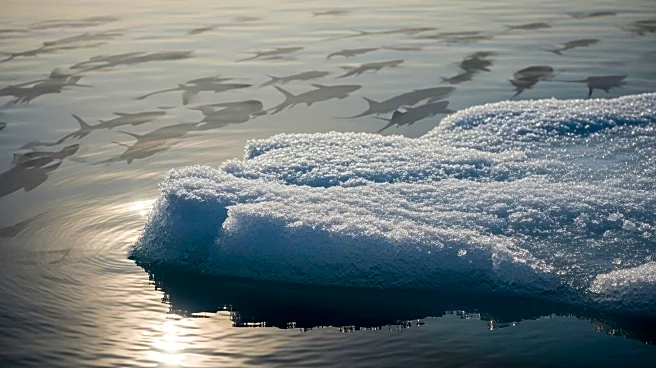
Recent research highlights the alarming rate at which sea ice is melting, posing a significant threat to the polar ecosystems that rely on it. The rapid loss of sea ice is disrupting the foundational levels of the food chain, particularly affecting microscopic
algae that are crucial for sustaining polar marine life. As sea ice diminishes, more sunlight penetrates the ice sheets, altering the nutritional value and life cycle of these microalgae. This change impacts the production of essential nutrients like fats and proteins, which are vital for krill and zooplankton, the primary food sources for many fish species. Polar marine ecologist Rebecca Duncan has emphasized that these changes are occurring in the Arctic, Antarctic, and Southern Ocean, regions that are experiencing rapid environmental shifts.
Why It's Important?
The degradation of the polar food chain has far-reaching implications beyond the poles, affecting global food systems. Polar fisheries play a crucial role in feeding populations worldwide, and changes in sea ice habitats could lead to a reduction in seafood supply, impacting both coastal communities and global markets. Additionally, the melting of glaciers contributes to rising sea levels, which exacerbate coastal flooding, intensify storm surges, and increase saltwater intrusion into agricultural lands and freshwater supplies. According to a study published in Nature, glacier melt has contributed significantly to global sea-level rise, exposing millions to increased flooding risks. This underscores the interconnectedness of polar changes with global environmental and economic stability.
What's Next?
Scientists, including those from NASA and the National Oceanic and Atmospheric Administration, continue to monitor glacier mass and issue warnings about melt trends. These efforts aim to better understand and mitigate the impacts of changing ice conditions on ecosystems and human communities. Public awareness and engagement in climate issues are also crucial, as they can drive collective action towards more sustainable practices. Encouraging discussions about climate change and exploring environmental topics can foster a more informed and proactive society in addressing these global challenges.