



What's Happening?
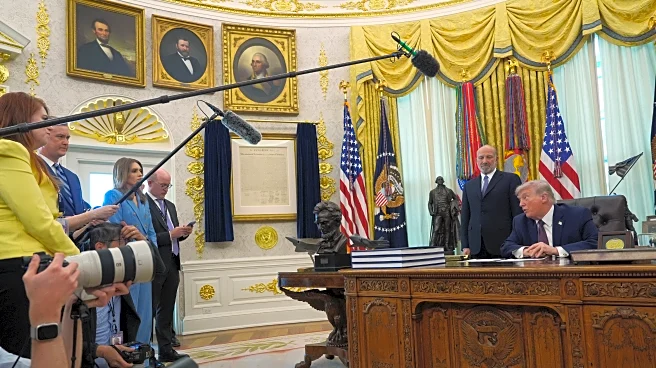
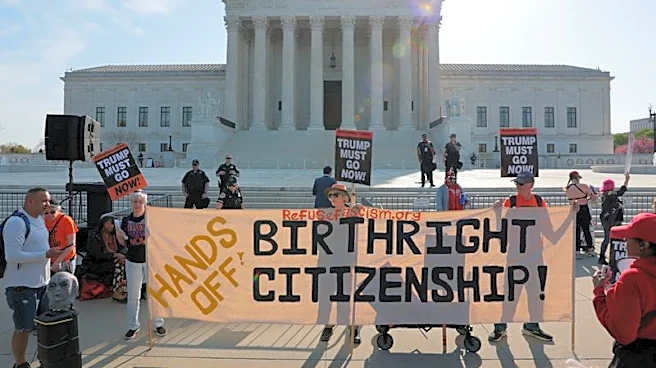
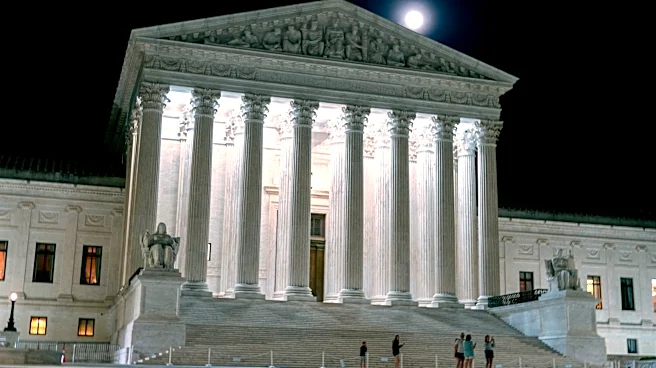
The U.S. Supreme Court is reviewing President Donald Trump's executive order that seeks to limit birthright citizenship for children born to non-citizens in the United States. The order, signed at the start of Trump's second term, has been blocked by
lower courts, which ruled it unconstitutional. The case challenges the interpretation of the 14th Amendment, which grants citizenship to all persons born in the U.S. The administration argues that children of non-citizens are not subject to U.S. jurisdiction and thus not entitled to citizenship. The Supreme Court's decision, expected by early summer, will have significant implications for immigration policy.
Why It's Important?
This case represents a critical test of executive power and could redefine the scope of birthright citizenship in the U.S. A ruling in favor of the executive order could alter the legal status of hundreds of thousands of children born in the U.S. each year, affecting their rights and access to services. The decision will also impact the broader immigration debate and could influence future policy decisions and legal interpretations of the Constitution.
What's Next?
The Supreme Court's ruling will set a precedent for how birthright citizenship is interpreted and applied. If the court upholds the executive order, it could lead to significant changes in immigration policy and enforcement. The decision may also prompt legislative action or further legal challenges, depending on the outcome. Stakeholders, including immigrant advocacy groups and legal experts, will closely monitor the case and its implications for civil rights and immigration law.