



What's Happening?
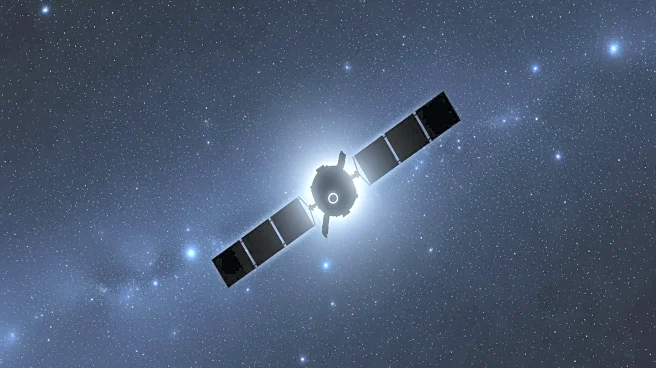
A study has found that Amazon's new internet-beaming satellites are bright enough to disrupt astronomical research. The satellites, part of a megaconstellation in low Earth orbit, exceed the brightness limit recommended by the International Astronomical
Union. This brightness can interfere with observations from ground-based and orbiting observatories. The study highlights the challenges posed by satellite megaconstellations to astronomical research, as they can obstruct the view of the night sky and affect data collection.
Why It's Important?
The increasing number of satellites in low Earth orbit poses a significant challenge to astronomical research, which relies on clear and unobstructed views of the night sky. The brightness of these satellites can lead to data contamination, affecting the accuracy of astronomical observations and potentially hindering scientific discoveries. This issue underscores the need for collaboration between satellite operators and the astronomical community to develop solutions that minimize the impact on research while allowing for the continued expansion of satellite networks.
What's Next?
Amazon and other satellite operators are working with astronomers to reduce the brightness of their satellites. Potential solutions include altering the design of satellites to reflect less sunlight and adjusting their orientation to minimize visibility from the ground. Continued dialogue between the space industry and the scientific community is essential to finding effective solutions that balance technological advancement with the preservation of astronomical research capabilities.