







What's Happening?
The Inter-American Development Bank (IDB) has approved a $101.68 million financing package aimed at improving road infrastructure in northwestern Honduras. This initiative seeks to enhance connectivity between agricultural regions and major logistics
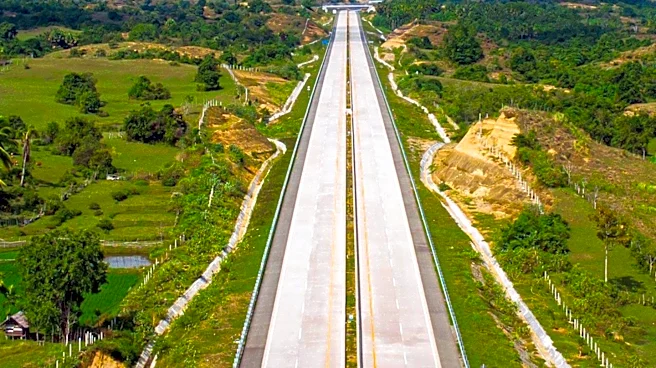
corridors and markets, ultimately reducing transportation costs for local producers. The funding will specifically target the rehabilitation, improvement, and maintenance of 48 kilometers of the Pito Solo–Santa Bárbara section of National Route 20 (RN-20), as well as rural roads in productive areas. The project is expected to directly benefit approximately 63,300 people, including producers, transport operators, and businesses involved in value chains, with an additional 32,630 indirect beneficiaries. Beyond physical road improvements, the program also includes components to strengthen the institutional and technical capacities of Honduras’ Secretariat of Infrastructure and Transportation (SIT) to improve road network management and ensure the long-term sustainability of these investments. The loan comprises $61.008 million from the Bank’s Ordinary Capital resources and $40.762 million from its Concessional Ordinary Capital resources, with varying repayment and grace periods and interest rates.
Why It's Important?
This IDB financing is significant for Honduras as it directly addresses critical infrastructure gaps that impede economic development and agricultural productivity. By improving road connectivity, the project aims to integrate remote agricultural areas more effectively into national and regional supply chains, including access to Puerto Cortés, a vital maritime gateway. This integration is expected to boost the competitiveness of Honduran agricultural products by lowering transportation costs, which can translate into higher incomes for farmers and more affordable goods for consumers. Furthermore, strengthening the institutional capacity of the Secretariat of Infrastructure and Transportation is crucial for ensuring that infrastructure investments are well-planned, executed, and maintained, fostering sustainable development. The project aligns with the IDB Group’s regional 'América en el Centro' program, underscoring a broader commitment to promoting development and integration across Central America, Panama, and the Dominican Republic, which can have positive ripple effects on regional trade and stability.
What's Next?
Following the approval, the next steps will involve the implementation phase of the road infrastructure projects in northwestern Honduras. This will include detailed planning, procurement processes for construction and maintenance services, and the commencement of physical works on National Route 20 and associated rural roads. Concurrently, efforts will begin to strengthen the institutional and technical capacities of Honduras’ Secretariat of Infrastructure and Transportation, likely through training programs, technical assistance, and the implementation of new management systems. Monitoring and evaluation mechanisms will be put in place to track the progress of road improvements, the reduction in transportation costs, and the overall impact on beneficiaries. The IDB will likely maintain oversight to ensure the project adheres to its objectives and financial agreements. Successful execution could pave the way for future IDB investments in Honduras and other Central American nations under the 'América en el Centro' program, further promoting regional integration and economic growth.
Beyond the Headlines
The IDB's investment in Honduran road infrastructure extends beyond immediate economic benefits, touching upon broader themes of regional development and social equity. Improved road networks can enhance access to essential services like healthcare and education for rural populations, contributing to overall human development. By facilitating better market access for agricultural producers, the project can help reduce rural poverty and stem urban migration by creating more viable economic opportunities in rural areas. Moreover, the focus on strengthening institutional capacities within the Honduran government is a critical element for long-term sustainability, fostering good governance and efficient public administration in infrastructure development. This approach helps build resilience against future economic shocks and natural disasters, which are prevalent in the region. The project also subtly reinforces the importance of international financial institutions in supporting developing nations to achieve their sustainable development goals, highlighting a model of partnership that combines financial aid with technical expertise and capacity building.