







What's Happening?
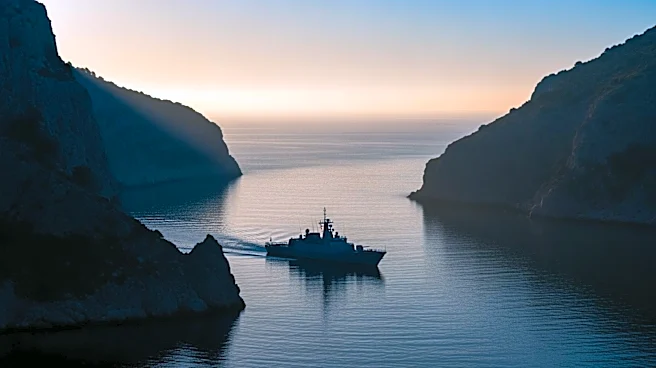
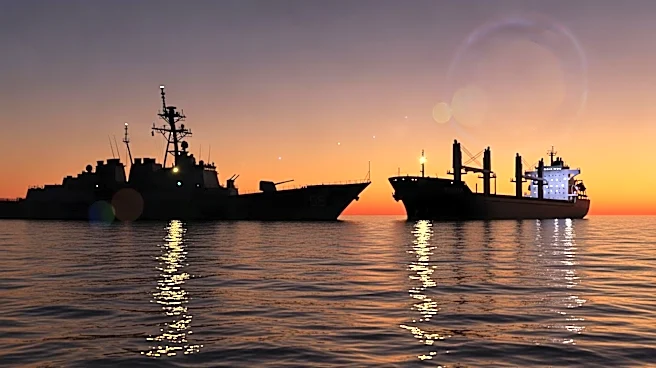
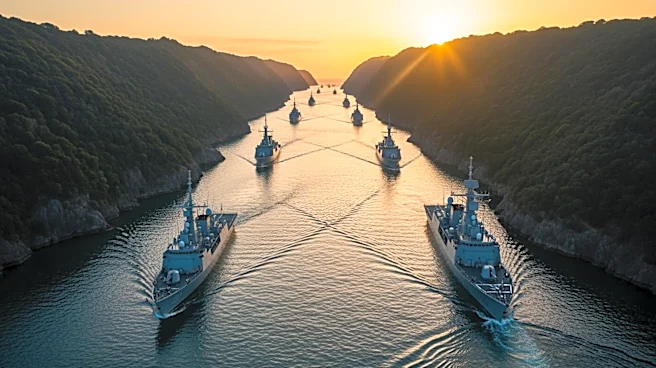
A new strategy proposes creating a temporary defended corridor through the Strait of Hormuz to ensure safe passage for shipping without escalating regional tensions. This approach involves establishing a managed transit system with naval escorts, airborne
surveillance, and a limited defensive presence. The strategy aims to compress risk into a controllable space, allowing commercial operators to navigate the strait with confidence. This proposal comes amid ongoing concerns about Iran's ability to threaten the waterway and the potential for a broader regional conflict.
Why It's Important?
The Strait of Hormuz is a critical chokepoint for global oil shipments, and ensuring its security is vital for international trade and energy markets. The proposed corridor strategy offers a practical solution to maintain shipping routes without resorting to large-scale military operations. By focusing on a temporary and manageable approach, the strategy seeks to balance security needs with the risk of escalation, potentially stabilizing the region and reassuring commercial stakeholders.
What's Next?
If implemented, the corridor strategy would require coordination among regional and international partners to ensure its effectiveness. The success of this approach could lead to broader adoption of similar strategies in other contested maritime regions. Stakeholders will need to monitor the situation closely to assess the strategy's impact on regional stability and global shipping.
Beyond the Headlines
The corridor strategy highlights the complexities of maritime security and the challenges of balancing military and commercial interests. It underscores the importance of innovative solutions in addressing geopolitical tensions and maintaining global trade routes. The approach also raises questions about the long-term sustainability of temporary security measures and their potential impact on regional power dynamics.