
What's Happening?
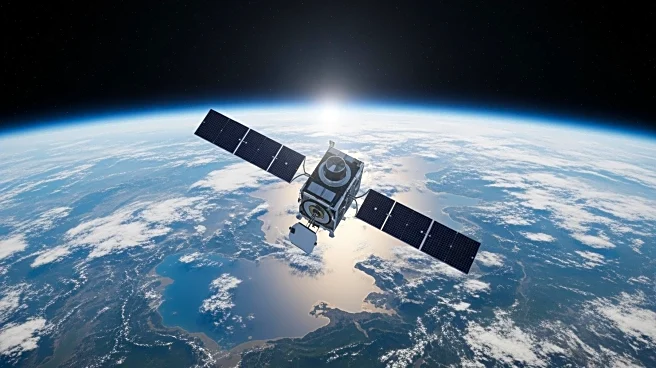
NASA's Terra satellite, launched in 1999 as part of the Earth Observing System, is approaching the end of its mission. Designed to study Earth's land surface, Terra has provided valuable data on the interactions
between the atmosphere, land, oceans, and ice. Despite its initial six-year mission, Terra has operated for over two decades, contributing significantly to climate science. The satellite's instruments, including MODIS and CERES, have been instrumental in monitoring environmental changes and natural disasters. As Terra's orbit begins to drift, NASA is preparing to retire the satellite, marking the end of an era in Earth observation.
Why It's Important?
Terra's long-term data collection has been crucial for understanding climate change and environmental dynamics. The satellite's observations have informed numerous scientific studies and policy decisions, enhancing our knowledge of Earth's systems. Its retirement signifies a shift in how Earth is monitored, with newer technologies and satellites expected to fill the gap. The end of Terra's mission also highlights the challenges of maintaining aging space infrastructure and the need for continuous investment in Earth observation capabilities.
What's Next?
As Terra is phased out, NASA will focus on newer satellite missions to continue Earth observation. The data collected by Terra will remain a valuable resource for researchers, and efforts will be made to ensure its accessibility. The transition to new technologies will involve integrating data from multiple sources to maintain comprehensive monitoring of Earth's climate and environmental changes. The scientific community will likely explore new methodologies and collaborations to leverage the wealth of data Terra has provided.
Beyond the Headlines
Terra's retirement prompts reflection on the evolution of satellite technology and its impact on climate science. The mission's success underscores the importance of international collaboration in space exploration and data sharing. As climate change remains a pressing global issue, the role of satellites in providing critical insights into environmental changes will continue to be vital. The legacy of Terra will influence future satellite missions and the development of innovative tools for Earth observation.