










What's Happening?
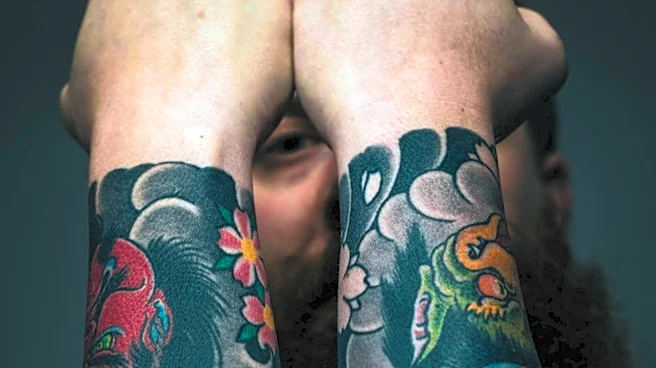
A federal lawsuit has been filed in South Carolina challenging the state's restrictions on tattooing, specifically targeting the ban on tattoos on the head, face, and neck, as well as the prohibition of tattoo facilities operating within 1,000 feet of a church,
school, or playground. The plaintiffs, including a New York-based tattoo company, Tiny Zaps, and South Carolina residents Joshua and Stephanie McDonald, argue that these restrictions violate the First Amendment by treating tattooing differently from other forms of protected expression. The lawsuit, filed in Charleston, claims that the restrictions limit both artists and customers, infringing on their rights to create and receive artistic expression. The plaintiffs are represented by the Pacific Legal Foundation, a law firm known for challenging government regulations on constitutional grounds.
Why It's Important?
The outcome of this lawsuit could have significant implications for the regulation of the tattoo industry in South Carolina and potentially beyond. If the court rules in favor of the plaintiffs, it could set a precedent that strengthens the protection of tattooing as a form of expression under the First Amendment. This could lead to changes in how states regulate tattoo businesses, potentially reducing restrictions that are seen as infringing on artistic freedom. The case also highlights ongoing debates about the balance between public health regulations and individual rights, particularly in industries that are often subject to stringent local laws.
What's Next?
The lawsuit is in its early stages, and the state of South Carolina has not yet responded to the claims. The case will likely proceed through the federal court system, where both sides will present their arguments. The outcome could prompt legislative changes if the court finds the current laws unconstitutional. Additionally, the case may attract attention from civil rights and artistic freedom advocates, potentially influencing public opinion and policy discussions around similar regulations in other states.