







What's Happening?
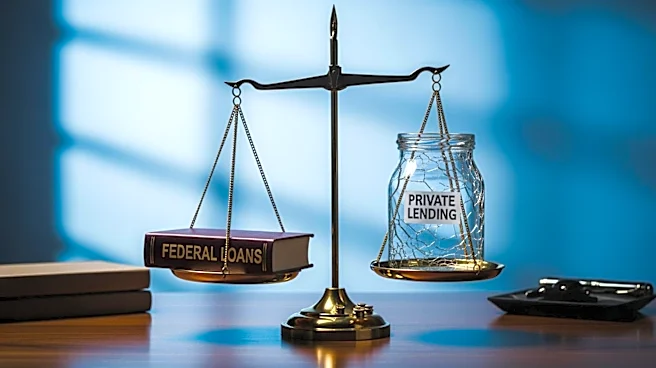
New federal caps on student borrowing are set to take effect, limiting the amount parents and graduate students can borrow. The caps are intended to encourage colleges to lower tuition costs. However, universities and private lenders are already establishing
private lending options to fill the gap, potentially leading students into riskier debt. The financial services company Ascent has raised $45 million to expand its student lending platform, and several universities are partnering with private lenders to maintain tuition revenue. The caps, part of the One Big Beautiful Bill Act, will significantly reduce federal lending, impacting students' ability to afford higher education.
Why It's Important?
The introduction of federal loan caps represents a major shift in student lending policy, aiming to address the rising cost of higher education. However, the move may inadvertently push students toward private loans, which often come with higher interest rates and less favorable terms. This could increase financial strain on students and families, particularly those from low-income backgrounds. The reliance on private lending may also perpetuate inequalities in access to education, as students may be deterred from pursuing higher education due to financial barriers. The situation underscores the need for comprehensive solutions to address college affordability.
What's Next?
As the loan caps take effect, there may be increased scrutiny on the role of private lenders in the education sector. Lawmakers and regulators could consider measures to ensure transparency and protect borrowers from predatory lending practices. Educational institutions may need to explore alternative funding models to support students, such as scholarships or income-share agreements. The impact of the loan caps on college enrollment and tuition pricing will be closely monitored, with potential policy adjustments in response to emerging challenges.