









What's Happening?
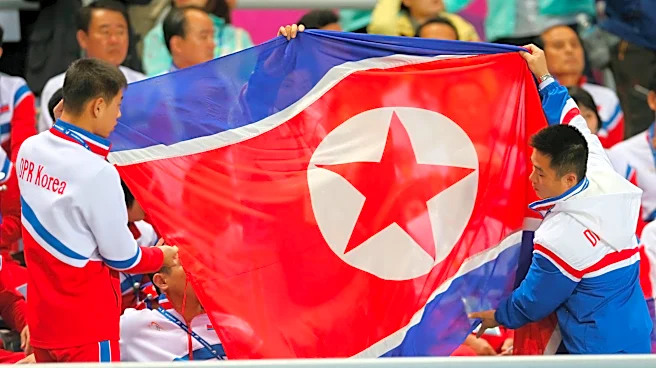
North Korea has made a significant change to its constitution by removing references to the reunification of the Korean Peninsula, a goal that has been a longstanding part of its policy. This change was reported by South Korean news outlet Yonhap and marks
a shift towards a more hostile stance against South Korea. The revision, believed to have been adopted at a meeting of North Korea's Supreme People's Assembly, is the first time a territorial clause has been added to the constitution. This development comes amid increasing tensions and a rejection of dialogue from South Korean President Lee Jae Myung.
Why It's Important?
The removal of the reunification clause from North Korea's constitution has significant implications for U.S. foreign policy and regional stability. For decades, the possibility of reunification has been a diplomatic tool that allowed for dialogue even during periods of tension. Its removal narrows the scope for engagement and complicates future negotiations on issues like arms control and sanctions relief. Additionally, the change strengthens Kim Jong Un's control over North Korea's nuclear arsenal, reinforcing the perception of North Korea as a permanent nuclear state. This development could lead to a more entrenched U.S.-South Korea deterrence posture and increase regional tensions.
What's Next?
The shift in North Korea's policy is likely to lead to increased pressure on the United States to demonstrate credible deterrence in the region. This may involve bolstering security guarantees to allies like Japan and South Korea. The change also raises the risk of miscalculation and long-term confrontation, as North Korea now legally defines South Korea as a separate state. The U.S. and its allies will need to navigate this new reality carefully to avoid escalating tensions further.