




What's Happening?
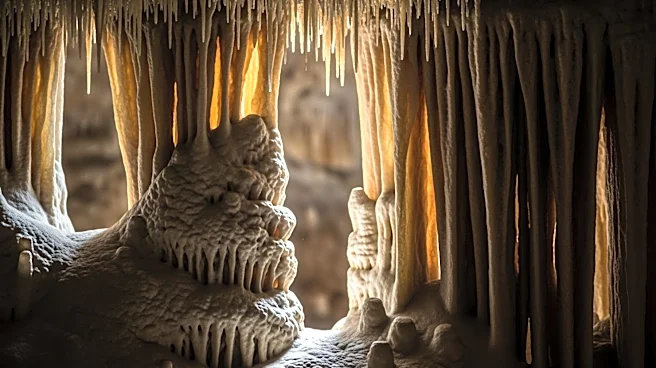
Mira Bar-Matthews, a researcher at the Geological Survey of Israel, has been awarded the 2026 Israel Prize in Geology and Earth Sciences for her groundbreaking work in paleoclimate research. Her studies focus on cave deposits, such as stalactites and stalagmites,
which serve as 'natural archives' to reconstruct past climate conditions and earthquake activity. Bar-Matthews' research has demonstrated how these formations can provide detailed information about historical climate conditions and precipitation patterns. Her work has opened new avenues for understanding the environmental and tectonic history of regions like the Mediterranean and the Middle East. By employing advanced geochemical methods, she has shown that cave deposits can preserve a 'memory' of the environmental conditions at the time they formed, offering insights into past climate changes and seismic events.
Why It's Important?
Bar-Matthews' research is significant as it provides a new method for understanding climate change and its historical patterns. This is crucial at a time when climate change is a pressing global issue. Her work allows scientists to reconstruct climate history with unprecedented precision, offering insights into how past climate conditions have shaped the environment and human societies. This research not only enhances our understanding of historical climate patterns but also aids in predicting future climate scenarios. The ability to accurately date and analyze cave deposits provides a reliable tool for assessing the timing, pace, and magnitude of climate change, which is vital for developing effective environmental policies and strategies.
What's Next?
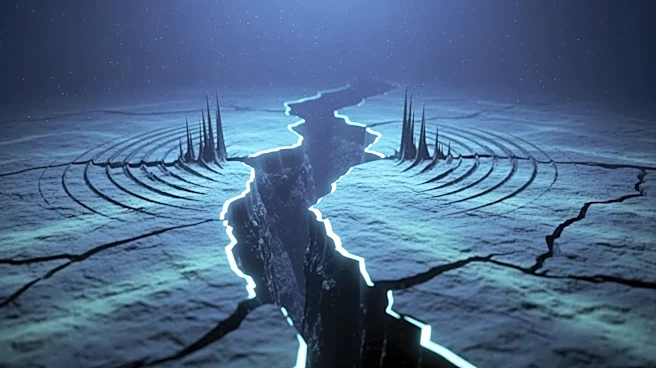
The implications of Bar-Matthews' research extend to various fields, including paleoseismology, where her methods are being used to detect ancient earthquakes. This could lead to a better understanding of seismic risks and inform building codes and safety measures in earthquake-prone areas. Additionally, her work may inspire further research into other natural archives, potentially uncovering more about Earth's climatic and tectonic history. As the scientific community continues to explore these avenues, Bar-Matthews' findings could play a pivotal role in shaping future research and policy decisions related to climate change and natural disaster preparedness.
Beyond the Headlines
Bar-Matthews' work highlights the importance of interdisciplinary research in addressing complex global challenges like climate change. Her ability to combine geology, chemistry, and environmental science exemplifies how collaborative efforts can lead to significant scientific breakthroughs. Furthermore, her research underscores the value of natural archives in providing long-term data that can inform current and future environmental strategies. This approach not only enhances scientific understanding but also emphasizes the need for preserving natural sites that hold valuable historical data.