








What's Happening?
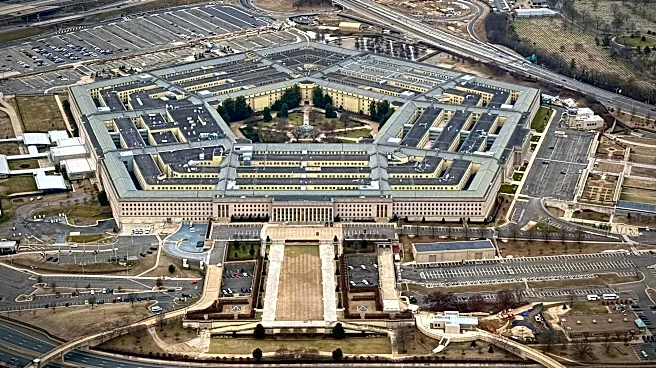
The Pentagon has requested approximately $80 billion from Congress to fund the ongoing war with Iran. This request is part of a larger military spending increase proposed by the White House, which seeks a total of $1.5 trillion for the Pentagon, marking
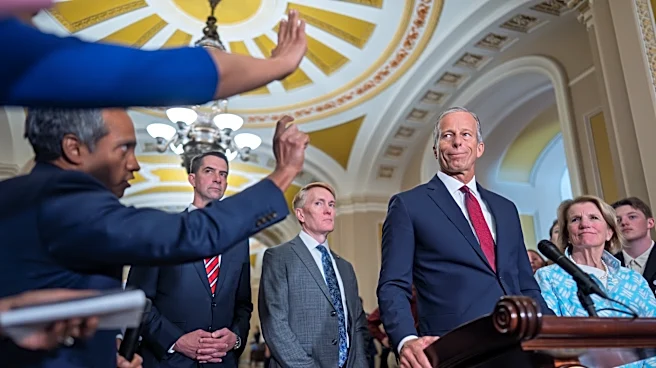
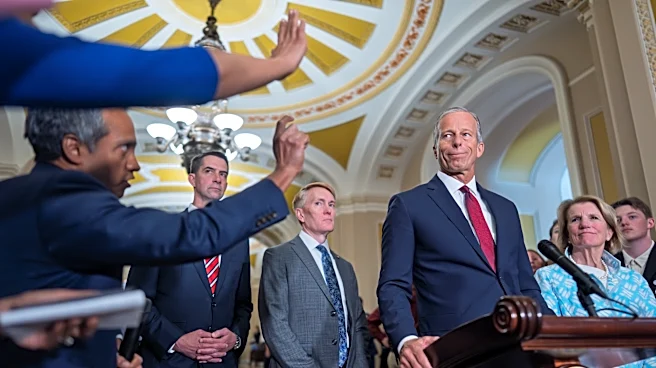
a nearly 50% increase over the current fiscal year's funding levels. Defense Secretary Pete Hegseth has been actively engaging with lawmakers on Capitol Hill to secure the necessary support for this funding package. However, the proposal is expected to face significant opposition from lawmakers who are critical of President Trump's decision to engage in the conflict with Iran and are hesitant to allocate additional funds to the Pentagon amidst rising living costs for Americans.
Why It's Important?
The request for additional military funding highlights the ongoing geopolitical tensions and the financial implications of the Iran conflict on the U.S. economy. The proposed increase in military spending comes at a time when many Americans are grappling with high living costs, potentially leading to public discontent and political pushback. The outcome of this funding request could significantly impact U.S. foreign policy and military strategy, as well as domestic economic conditions. Lawmakers' decisions on this matter will reflect broader political dynamics and could influence public opinion ahead of upcoming elections.
What's Next?
As the Pentagon's funding request moves through Congress, it is likely to encounter debates and negotiations among lawmakers. The White House Office of Management and Budget has yet to make a formal request, indicating that discussions and revisions may occur before any final decision is reached. The political landscape, including public opinion and the positions of key congressional leaders, will play a crucial role in determining the outcome of this funding proposal. Additionally, the ongoing situation in Iran and any developments in U.S.-Iran relations could further influence the legislative process.