
What's Happening?
The National Oceanic and Atmospheric Administration's (NOAA) Space Weather Prediction Center has issued geomagnetic storm watches for June 8 and June 9 due to an expected coronal mass ejection (CME) from
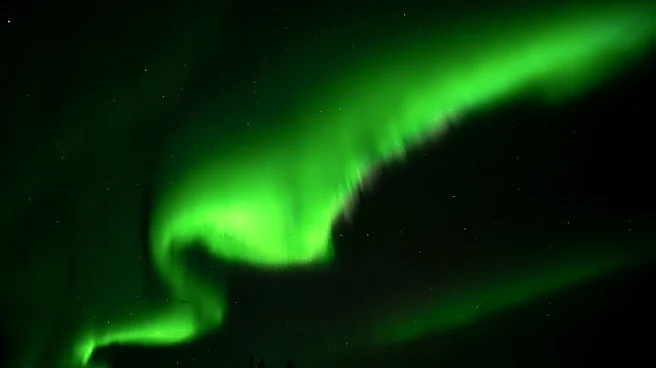
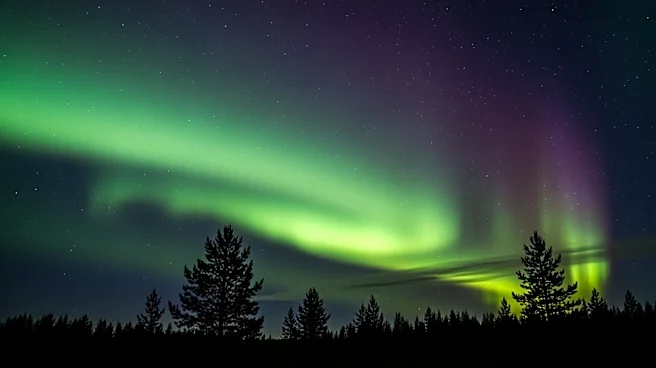
the sun. This CME is anticipated to cause a G3 geomagnetic storm, a strong disturbance in Earth's magnetic field, which could make the northern lights visible over many northern states, parts of the lower Midwest, and Oregon. The aurora borealis, commonly known as the northern lights, are typically most visible between 10 p.m. and 2 a.m. The strongest geomagnetic activity is expected between 11 a.m. and 2 p.m. ET on June 8, although this peak occurs during daylight hours in the Northeast. The best nighttime viewing window is expected between 8 p.m. and 11 p.m. ET. There is a 17% chance the aurora will be visible in Connecticut, although the state lies outside the current forecast viewline.
Why It's Important?
The potential visibility of the northern lights in areas as far south as the Great Lakes region highlights the significant impact of solar activity on Earth's magnetic field. Such events can have broader implications for satellite operations, power grids, and communication systems, which can be affected by geomagnetic storms. For residents in the northern U.S., this presents a rare opportunity to witness a natural phenomenon typically confined to higher latitudes. The event underscores the importance of monitoring space weather, as it can have tangible effects on technology and infrastructure. Additionally, the visibility of the northern lights can boost local tourism and interest in astronomy.
What's Next?
As the geomagnetic storm progresses, NOAA will continue to monitor the situation and provide updates on the storm's intensity and potential impacts. Residents in the affected areas are advised to check local forecasts and plan for optimal viewing conditions, which include finding locations away from city lights. The storm is expected to weaken to a G2 level on June 9, reducing the likelihood of aurora visibility further south. Stakeholders in industries reliant on satellite and communication technologies will be on alert for any disruptions caused by the geomagnetic activity.