


What's Happening?
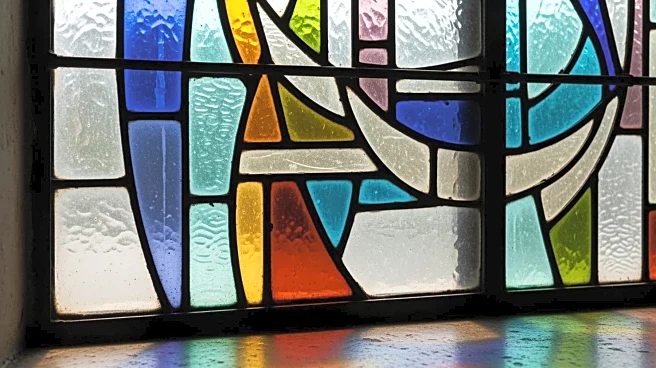
French artist Claire Tabouret has designed new stained-glass windows for the Notre-Dame Cathedral in Paris, a project that has stirred controversy. Following the 2019 fire that damaged the historic church, President Emmanuel Macron initiated a restoration
effort that included an open call for contemporary stained-glass designs. Tabouret's work was selected from over 100 submissions, despite opposition from France's National Commission for Heritage and Architecture. Her designs, which depict the Biblical story of Pentecost, aim to bring a modern touch to the cathedral while respecting its historical significance. The windows are being crafted by Atelier Simon-Marq, a renowned stained-glass workshop in Reims, France. Tabouret's work is also featured in a retrospective at the Museum Voorlinden in the Netherlands, showcasing her vibrant, motion-inspired canvases.
Why It's Important?
The introduction of contemporary art into a historic site like Notre-Dame highlights the ongoing debate between preservation and modernization in cultural heritage. This project reflects broader discussions about how historical sites can evolve while maintaining their cultural significance. For France, this initiative represents an effort to blend tradition with modernity, potentially setting a precedent for future restoration projects. The controversy underscores the challenges of balancing artistic innovation with public sentiment and historical integrity. The outcome of this project could influence future decisions on how cultural landmarks are preserved and updated, impacting artists, historians, and policymakers.
What's Next?
As the stained-glass windows are completed, public reception will play a crucial role in determining the project's success. The exhibition at the Grand Palais in Paris, where full-sized maquettes of the windows are displayed, aims to engage the public and foster acceptance of the new designs. The ongoing debate may lead to further discussions about the role of contemporary art in historical settings. Stakeholders, including cultural institutions and government bodies, will likely continue to evaluate the impact of such projects on cultural heritage preservation. The project's reception could influence future restoration efforts at Notre-Dame and other historical sites.
Beyond the Headlines
This project raises questions about the role of contemporary art in religious and historical contexts. It challenges traditional views on how sacred spaces should be preserved and used, potentially leading to a broader acceptance of modern artistic expressions in such settings. The collaboration between traditional craftsmanship and contemporary design exemplifies a fusion of old and new, which could inspire similar projects worldwide. The ethical considerations of altering historical sites for modern artistic purposes may also prompt discussions about cultural identity and heritage conservation.