






What's Happening?
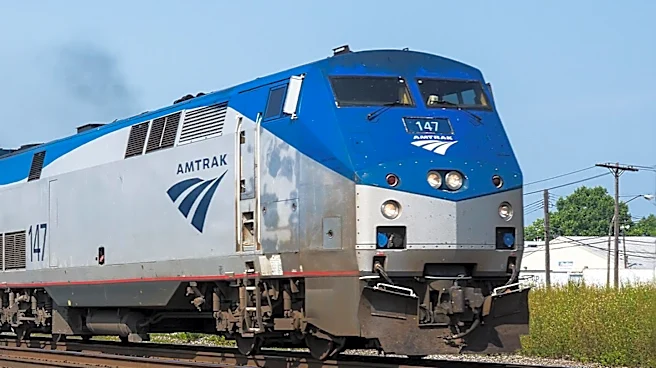
A federal government report has concluded that a proposed Amtrak maintenance facility in Bridgeport would have an "insignificant" environmental impact. This assessment brings Amtrak closer to relocating its maintenance operations from the South Loop to Bridgeport,
near Rate Field. The U.S. Department of Transportation conducted the environmental assessment, which acknowledged the presence of contaminated soil and groundwater at the proposed site, as well as potential daily vibrations from yard operations. Despite these acknowledgments, the report did not find a major impact. The project, estimated to cost $900 million, is also linked to plans for a potential new White Sox stadium in the South Loop, with the team's minority owner serving as a private developer for the Amtrak project.
Why It's Important?
This environmental assessment is a critical step forward for Amtrak's plans, but it has generated significant concern among Bridgeport residents. Neighbors argue that the report downplays the potential impact on their community, where over 6,500 people live within 500 feet of the proposed site. Their concerns include the acknowledged contaminated soil and groundwater, as well as daily vibrations, which they believe warrant a more thorough examination of alternative locations. The project's connection to a potential new White Sox stadium also raises questions about urban development priorities and the influence of private developers in public infrastructure projects. The community's opposition highlights ongoing tensions between development goals and local quality of life concerns.
What's Next?
Despite the federal assessment, local opposition to the proposed Amtrak facility continues. Some aldermen have voiced their disapproval, and a resolution opposing the facility is slated for a vote by the full city council soon. While aldermen may not be able to halt the project directly, a city council vote against it could signal strong local disapproval and potentially influence future discussions or legal challenges. Residents are advocating for a more meaningful examination of non-residential alternatives. The project's future will likely involve continued community engagement, political debate, and potential legal avenues as stakeholders on both sides press their cases. The outcome will significantly impact the Bridgeport neighborhood and potentially set precedents for similar urban development projects.
Beyond the Headlines
The controversy surrounding the proposed Amtrak facility in Bridgeport extends beyond environmental impact assessments to broader issues of environmental justice and community self-determination. Residents' concerns about contaminated soil, groundwater, and vibrations, despite the 'insignificant' finding, highlight a common struggle in urban areas where industrial development often disproportionately affects established neighborhoods. The project's ties to a private developer and a potential new sports stadium also bring into focus the complex interplay between public infrastructure, private investment, and community interests. This situation could become a case study in how federal assessments are weighed against local concerns and the power dynamics involved in large-scale urban redevelopment, potentially influencing future policy on community involvement in such projects.