
What's Happening?
Naval Air Station (NAS) Meridian hosted a Homemade Explosives (HME) Training on August 28, involving local and state civilian agencies, as well as canine units from other military installations. The primary
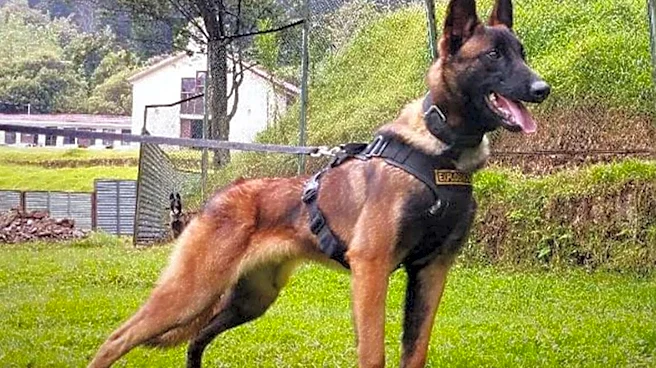
objective of this training was to enhance the ability of military working dogs (MWDs) to detect explosive materials. FBI Special Agent Bomb Technicians provided HME samples and led the training, which is part of a quarterly program conducted by the FBI at various host locations. Participants included the Mississippi Highway Patrol, Tupelo Police Department, FBI, NAS Pensacola, and NAS Meridian. The training began with odor imprinting, where canines were introduced to live HME samples, followed by complex search scenarios within a building, where dogs located hidden materials and alerted their handlers.
Why It's Important?
This joint training is crucial for national security and public safety, particularly in the context of evolving threats involving homemade explosives. By broadening the detection capabilities of MWDs, the program directly contributes to preventing potential terrorist acts and safeguarding communities. The collaboration between military, federal (FBI), and local law enforcement agencies fosters interoperability and strengthens a unified response to explosive threats across different jurisdictions. This shared expertise and resource utilization ensure that all participating agencies are equipped with the latest techniques and knowledge in explosive detection. For the MWDs, continuous exposure to diverse HME compounds in realistic scenarios is vital for maintaining their proficiency and effectiveness in real-world situations, ultimately saving lives and protecting critical infrastructure.
What's Next?
The FBI conducts these HME trainings quarterly, indicating that similar joint exercises will continue to be organized at various locations, inviting different agencies to participate. NAS Meridian's Military Working Dog Program has a requirement for periodic training with homemade explosive materials, ensuring ongoing readiness. Participating agencies, such as the Mississippi Highway Patrol, will integrate the learned techniques and enhanced canine capabilities into their operational protocols. This continuous training cycle will ensure that MWDs and their handlers remain at the forefront of explosive detection, adapting to new threats as they emerge. The strengthened relationships between military and civilian law enforcement agencies through these collaborative efforts are also expected to continue, leading to more coordinated and effective responses to public safety challenges.
Beyond the Headlines
Beyond the immediate operational benefits, this joint training highlights a broader strategic imperative for inter-agency cooperation in national security. The sharing of resources and expertise between military and civilian entities underscores a comprehensive approach to counter-terrorism and public safety. It also reflects the adaptability of law enforcement and military programs to address complex and evolving threats, such as those posed by homemade explosives, which require specialized detection methods. This collaborative model could serve as a blueprint for addressing other complex security challenges, promoting a more integrated and resilient national security framework. Furthermore, the emphasis on canine detection technology showcases the continued importance of specialized animal capabilities in modern security operations, complementing human intelligence and technological advancements.