







What's Happening?
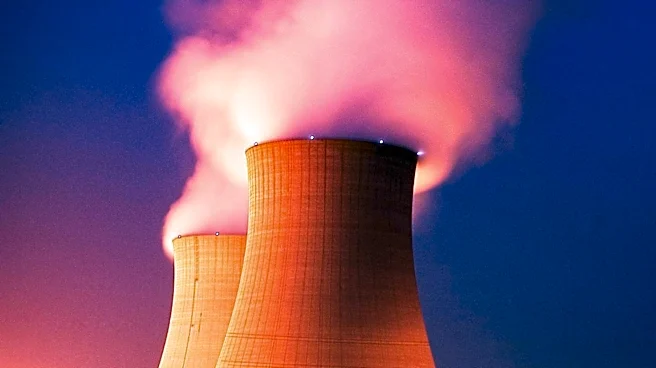
U.S. Senators Chris Coons (D-Del.) and Ted Budd (R-N.C.) have introduced the Foundational Infrastructure for Responsible Use of Small Modular Reactor Technology (FIRST) Act. This bipartisan legislation aims to codify the U.S. State Department's FIRST program,
which promotes the responsible deployment of civil nuclear energy worldwide. The act seeks to strengthen U.S. leadership in nuclear energy by fostering international partnerships, ensuring high safety and nonproliferation standards, and supporting early-stage commercial project development. The initiative is designed to offer an alternative to Chinese and Russian nuclear technologies, thereby enhancing U.S. energy security and economic interests.
Why It's Important?
The introduction of the FIRST Act is a strategic move to bolster U.S. influence in the global nuclear energy market. By providing a framework for international cooperation and technology sharing, the legislation aims to secure long-term partnerships and expand markets for American nuclear technology. This is crucial for maintaining U.S. competitiveness and leadership in the nuclear sector, especially as other nations seek to establish their own nuclear capabilities. The act also aligns with broader goals of promoting clean energy and reducing global reliance on fossil fuels, contributing to climate change mitigation efforts.
What's Next?
The bill will undergo further legislative scrutiny and debate in Congress. If enacted, it will formalize the FIRST program's objectives, potentially leading to increased U.S. involvement in global nuclear projects. This could result in new economic opportunities for American companies and reinforce the U.S.'s role in setting international nuclear standards. The legislation's progress will be closely watched by industry stakeholders and international partners, as it could reshape the dynamics of global nuclear energy cooperation.