

What's Happening?
In 2013, Chicago Public Schools (CPS) attempted to ban the graphic novel 'Persepolis' from its curriculum, sparking significant controversy and student protests. The book, which depicts the author's childhood during the Islamic Revolution in Iran, was
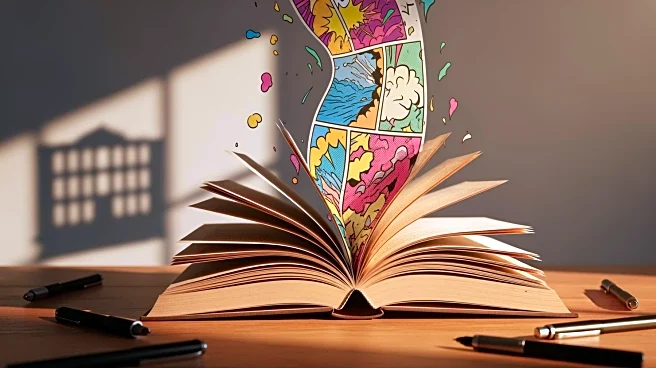
removed due to concerns over a depiction of torture. The incident led to a public outcry and was eventually reversed, with the book being reinstated in most classrooms. Jarrett Dapier, a librarian at the time, was inspired by the events to create a graphic novel titled 'Wake Now in the Fire: A Story of Censorship, Action, Love and Hope.' This novel, illustrated by A.J. Dungo, explores the censorship incident and its implications, weaving in real communications and interviews with those involved. The book serves as both a narrative and a historical account of the events, highlighting the challenges of censorship in educational settings.
Why It's Important?
The 2013 book ban incident at CPS underscores ongoing debates about censorship and academic freedom in U.S. schools. The attempt to remove 'Persepolis' highlights the tension between educational content and administrative control, raising questions about who decides what is appropriate for students. The graphic novel adaptation by Dapier not only preserves the history of this incident but also serves as a reminder of the importance of intellectual freedom. It reflects broader national trends, as book challenges and bans have increased significantly in recent years, according to PEN America. This case illustrates the potential for student activism to influence educational policy and the importance of maintaining open access to diverse perspectives in school curricula.
What's Next?
The release of 'Wake Now in the Fire' may reignite discussions about censorship and educational content in schools. As book bans continue to rise across the U.S., this graphic novel could serve as a catalyst for renewed advocacy for intellectual freedom. Educational institutions and policymakers might revisit their policies on book challenges, ensuring that processes are transparent and inclusive of diverse viewpoints. Additionally, the novel's publication could inspire other educators and librarians to document and resist censorship efforts, contributing to a broader movement for academic freedom.
Beyond the Headlines
The CPS book ban incident and its aftermath reveal deeper issues within educational systems, such as the impact of administrative decisions on academic freedom and the role of librarians in safeguarding access to information. The incident also highlights the potential consequences of treating educational institutions as businesses, where decisions may prioritize administrative convenience over educational value. The graphic novel serves as a cultural artifact, preserving the voices and actions of those who resisted censorship, and may influence future generations to value and protect intellectual freedom.